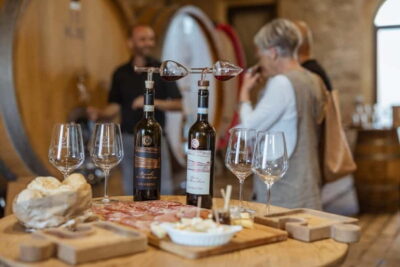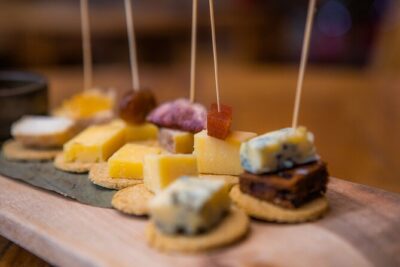
REVIEW · MOIRES
Farm Tour with Cheese-Making, Olive Oil Tasting & Picnic
Book on GetYourGuide →Operated by Marianna Papagrigoriou ( Cretan Vibes ) · Bookable on GetYourGuide
One visit to this family farm and you get it. I love the olive oil tasting lesson and the way you see it all in one place, from groves to table. I also love the live mizithra cheese-making with Mama Stela, plus her homemade food and raki. The main catch is simple: you’re walking outdoors on uneven ground, so comfy shoes are not optional.
You’ll meet the host team at Cretan Vibes (Marianna Papagrigoriou), then move through olive groves and greenhouse areas with a live guide in English or Greek. The vibe is rural and calm, not a show put on for tourists, and that’s the point. If you hate being in the sun or have mobility limits, plan carefully.
In This Review
- Key highlights you’ll actually care about
- Farm Fresh Crete: Olive Groves, Greenhouses, and the Mizithra Moment
- Price and what $60 buys you on a 2.5-hour farm visit
- Price and logistics: where Cretan Vibes is and how to get there
- The olive grove walk: cultivation, harvesting, and sustainable farming basics
- Olive oil tasting lesson: how to read aroma and quality
- Greenhouses and crops: why local produce reaches beyond local markets
- Cheese-making with Mama Stela: watching mizithra come to life
- Picnic under the wooden roof: homemade food and raki included
- Timing, walking comfort, and what to pack
- Who this tour suits best (and who should skip it)
- Should you book the Crete family farm tour with olive oil tasting and cheese-making?
- FAQ
- How long is the farm tour?
- What’s included in the price?
- Is transportation included?
- What languages are spoken during the tour?
- What should I bring or wear?
- Is the tour wheelchair accessible?
Key highlights you’ll actually care about
- A guided walk through olive groves and greenhouses, not a quick stop with a sample
- Premium olive oil tasting with help on aromas and quality
- A behind-the-scenes harvest video, tree-to-bottle context
- Live Cretan cheese-making (mizithra) with tasting led by Mama Stela
- Picnic under a wooden roof, with homemade delicacies, refreshments, water, and raki
- Straightforward meeting spot and on-site parking at Cretan Vibes
Farm Fresh Crete: Olive Groves, Greenhouses, and the Mizithra Moment
This is the kind of Crete experience that feels practical. You’re not just looking at pretty scenery; you’re getting explanations tied to real farm work, and then you eat what that work produces.
The heart of the tour is the flow. You start outdoors in the olive groves and greenhouse areas, then the tour shifts to an outdoor eating spot under a wooden roof. The big payoff is that the cheese-making happens live, not as a pre-made prop, and you get to taste the result.
Price and what $60 buys you on a 2.5-hour farm visit
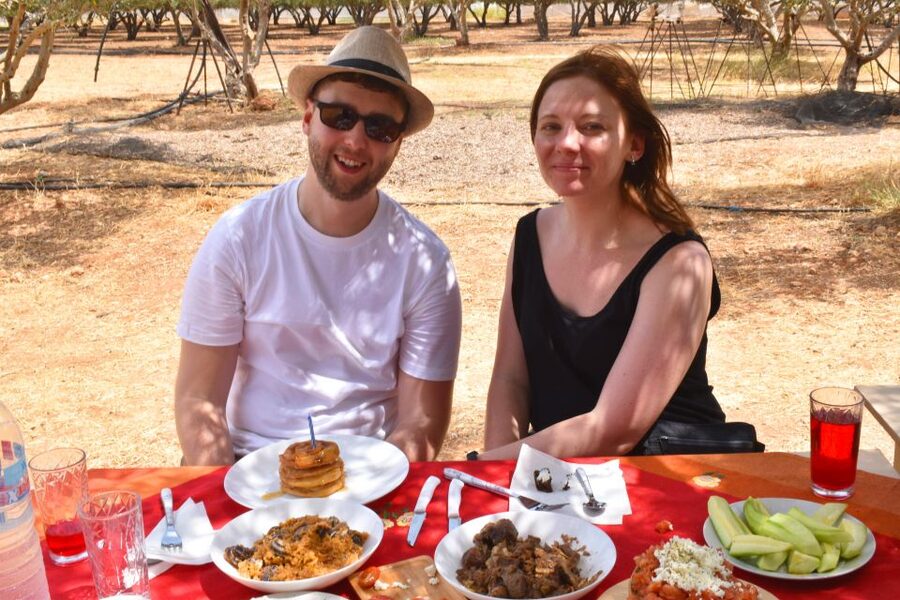
For $60 per person, the value comes from volume and variety. You’re getting guided time in olive groves, a guided look at greenhouses, an olive oil tasting, a harvest video explanation, a live cheese-making demo with tasting, plus a traditional picnic with homemade food and raki.
It’s also not just food-only. The olive oil part is taught, and the cheese part is demonstrated live by Mama Stela. If you like experiences where you learn a little, eat a lot, and don’t have to think about sourcing food after, this is a strong match.
One note: transportation isn’t included. If you don’t have a car, you’ll need to handle the ride to Cretan Vibes yourself.
Price and logistics: where Cretan Vibes is and how to get there
Meeting point is Cretan Vibes on National Road 97. There’s parking inside the farm, which saves you stress in a rural location.
Watch the directions carefully. If your GPS tells you to turn toward the Panagia Kaliviany Monastery, avoid that turn and continue straight on the main road. Look for the Cretan Vibes farm signs.
Because this is a walk-and-taste schedule, arrive with enough buffer that you’re not rushed. When you’re late, you end up missing part of the guided flow.
The olive grove walk: cultivation, harvesting, and sustainable farming basics
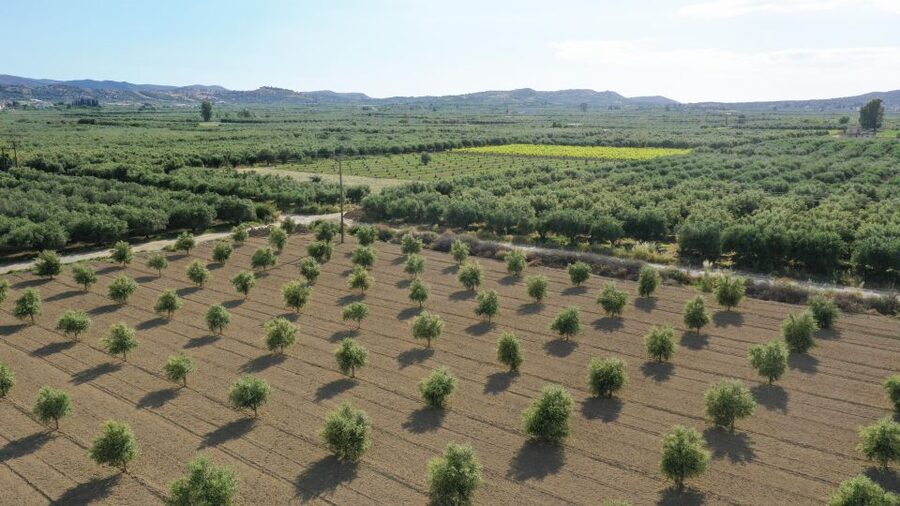
The tour begins with a walking visit through the family’s olive groves and greenhouse spaces. The guide explains their sustainable way of life and what they do on the land, from cultivation to harvesting.
I like that it’s not vague. You get a guided look at the process of olive cultivation and harvesting, plus how that connects to producing extra virgin olive oil. Even if you’ve tasted olive oil before, it’s easier to understand quality when you’ve walked past the trees and heard how harvest and processing make a difference.
You’ll also get a short behind-the-scenes harvest video showing their own harvest method—tree to pressing to bottle. That visual piece helps the tasting make sense.
Olive oil tasting lesson: how to read aroma and quality
This is the part many people underestimate. You’re not just sipping oil for fun. You learn how to recognize aromas and qualities of real extra virgin olive oil.
The guide also ties it to choices made during harvesting and processing. That matters because you’ll remember what changed and why, which is how you improve your buying decisions later. After this, you’ll be more likely to pay attention to what’s in the bottle rather than picking randomly.
You should go into the tasting with a relaxed mindset. Your senses will do the work. You don’t need to know “the right words,” just pay attention to what you smell and taste.
Greenhouses and crops: why local produce reaches beyond local markets
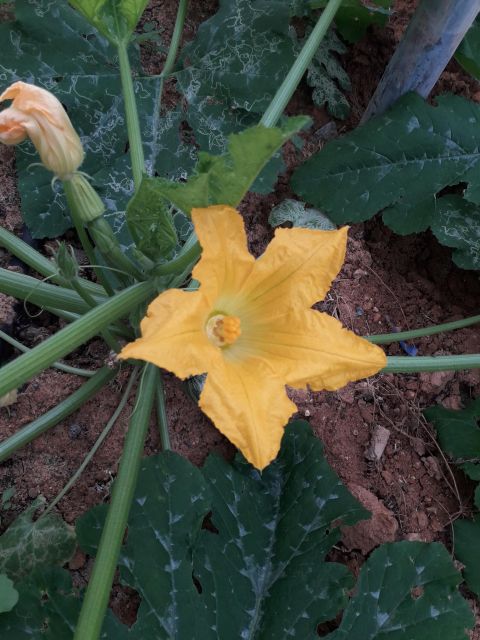
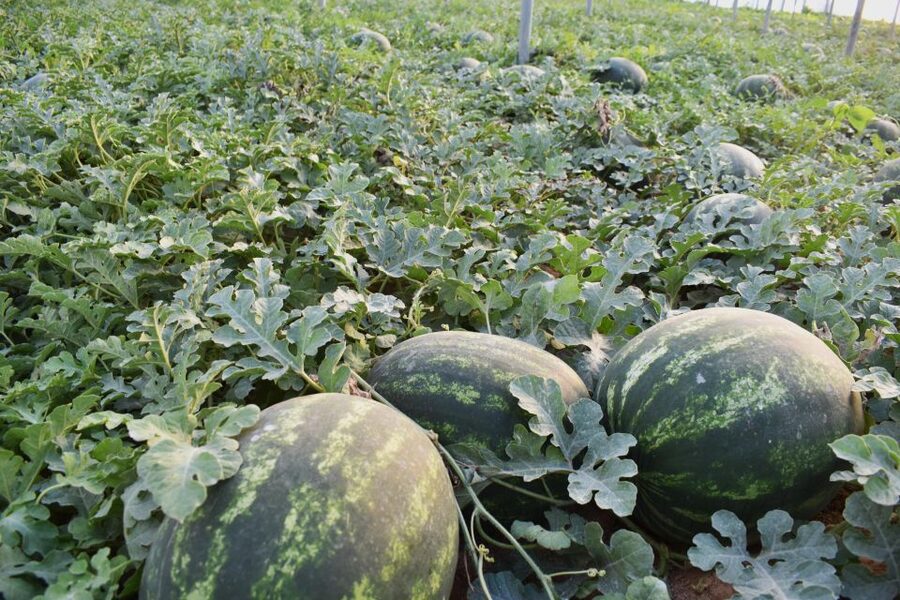
Next up, you explore the family greenhouses and the surrounding cultivation. The guide walks you through the variety of vegetables and fruits they grow.
Then comes the practical part: they explain why local products matter not only for local markets but also for metropolitan markets across Greece. That link between a farm operation and wider demand is useful, because it helps you see this isn’t just a hobby. It’s part of a supply chain, and you’re seeing the beginning of it.
If you like food that comes with context, you’ll enjoy this section. It connects your picnic plate to the bigger picture.
Cheese-making with Mama Stela: watching mizithra come to life
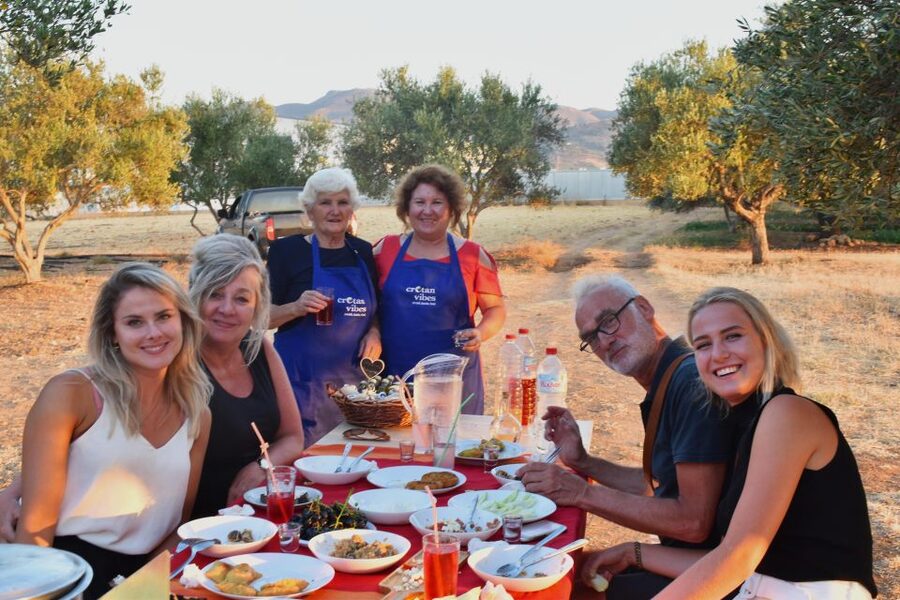
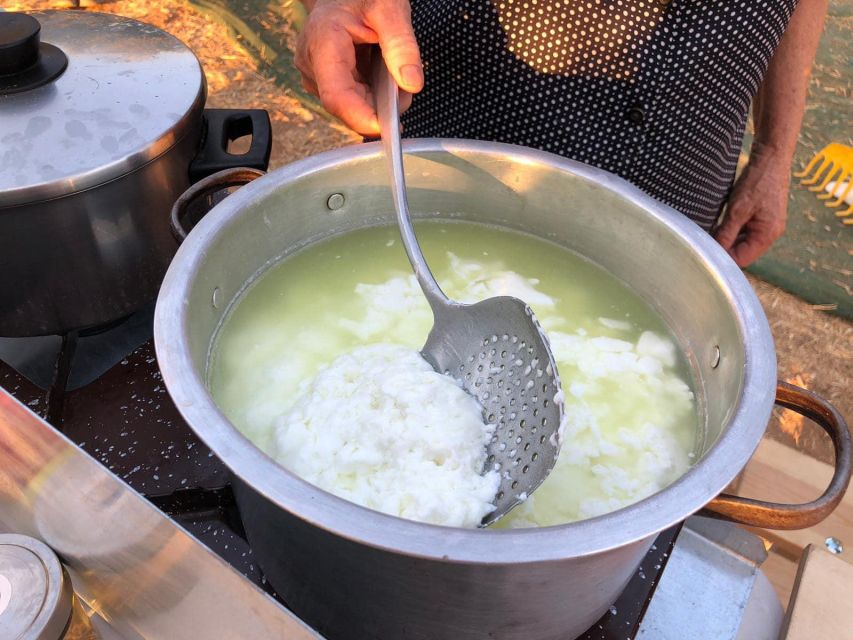
The standout moment is meeting Mama Stela and watching her demonstrate Cretan cheese-making, followed by a tasting. This is live production, not a lecture, and it stays hands-on in feel.
You’ll be in an outdoor space beneath a wooden roof, with olive trees on one side and a lush garden on the other. That setting keeps the demo grounded in the environment the family lives with daily.
What makes this part worth your time is the pairing: you don’t just see how it’s made; you taste it right after. That’s where you learn what fresh and local really means for flavor, because you’re tasting without the long stretch between making and serving.
Picnic under the wooden roof: homemade food and raki included
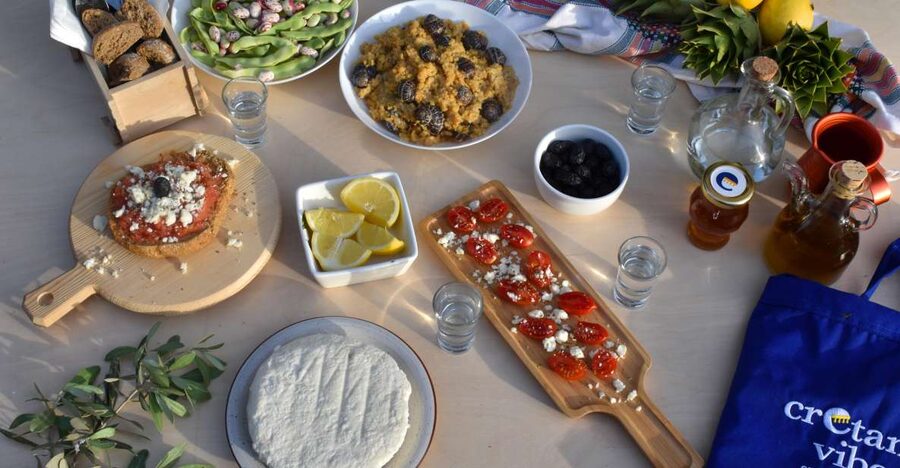
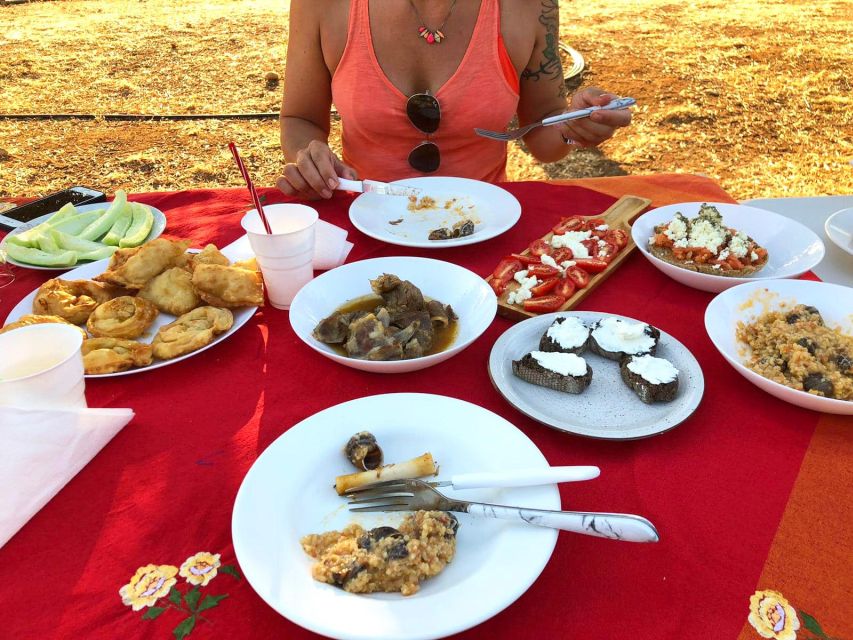
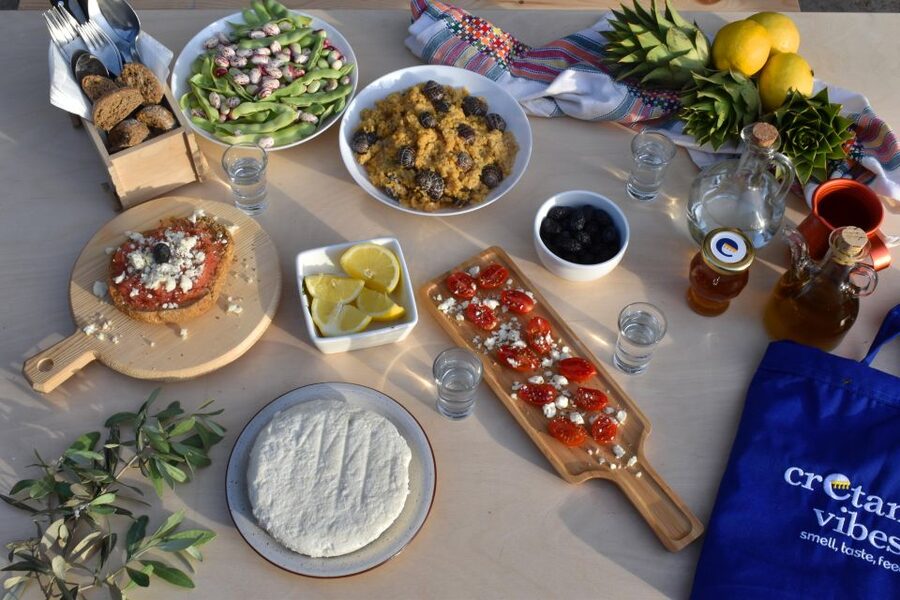
After the walks and demos, you shift to food. Mama Stela’s meal is traditional and home-cooked, served as a picnic under that wooden roof.
The tour includes a variety of her delicacies, handmade refreshments, water, and raki. The raki being part of the meal is not just a detail; it’s how the family frames the experience. It turns the tour from a tasting session into a real sit-down moment (just in a relaxed outdoor picnic format).
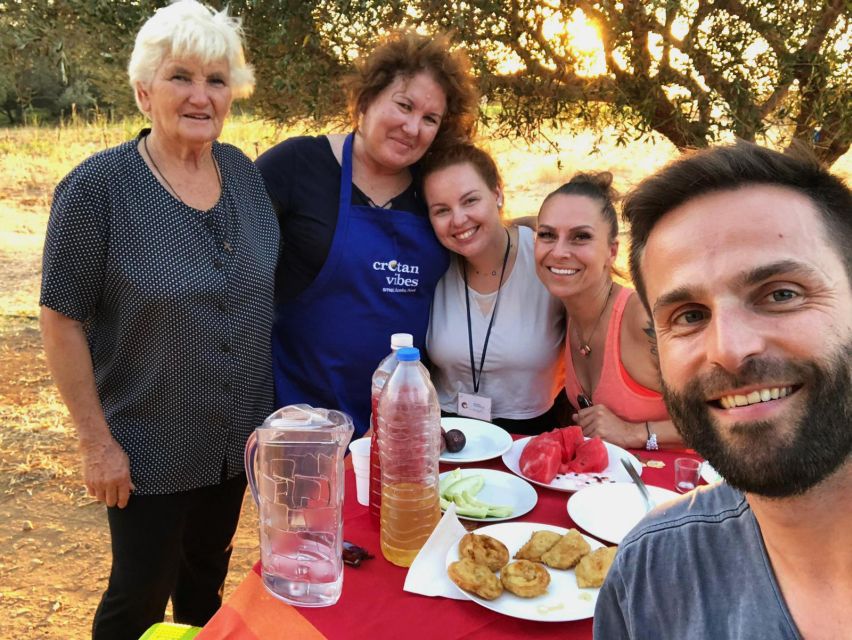
This is also where you might meet other family members, depending on the day. It’s the personal touch that makes the whole schedule feel like you’re invited rather than processed.
Timing, walking comfort, and what to pack
The experience lasts about 2.5 to 3 hours, with 2.5 hours as the planned duration. It’s all designed to fit into a single morning or afternoon window without dragging.
You’ll be walking through olive groves and fields, so bring comfortable shoes. Sunglasses, a sun hat, and sunscreen are smart since you’ll be outdoors.
High-heeled shoes aren’t allowed, and sports shoes are a good call. If your feet don’t like uneven ground, don’t show up in sandals and hope for the best.
Who this tour suits best (and who should skip it)
This works well if you want a Crete farm day focused on food. Olive oil fans will appreciate the tasting lesson and the connection between harvesting and quality. Food lovers who enjoy seeing the “how” behind what they eat will enjoy the mizithra demo.
It’s also a solid choice if you like rural experiences that feel family-led. The tour is designed to help you see Crete through the eyes of a local family, and that tone shows in how everything is scheduled together.
Skip it if you can’t handle walking outdoors on farm ground. It’s not suitable for wheelchair users, and it’s also not suited for people with epilepsy or hearing-impaired people.
If you’re sensitive to sun, plan for it. Bring what you need, and take your time where the guide allows it.
Should you book the Crete family farm tour with olive oil tasting and cheese-making?
Book it if you want a food-focused Crete experience that’s more than tasting. You get guided olive grove and greenhouse time, a real olive oil tasting with explanation, a behind-the-scenes harvest video, live mizithra cheese-making by Mama Stela, and a picnic with homemade food and raki. For $60 over about 2.5 hours, the value is strong because so much is included and the flow makes sense.
Skip it if you need transportation provided, if you can’t do outdoor walking, or if being outdoors for a couple of hours would be uncomfortable for you. If those issues don’t apply, this is the kind of tour that leaves you knowing what you ate, where it comes from, and how the farm thinks.
FAQ
How long is the farm tour?
The experience lasts about 2.5 to 3 hours, with the duration listed as 2.5 hours.
What’s included in the price?
You get guided tours in the family olive groves and greenhouses, premium olive oil tasting (plus a harvest video explanation), a Cretan cheese-making demo with tasting, and a traditional picnic with homemade food, handmade refreshments, water, and raki.
Is transportation included?
No. Transportation services are not included.
What languages are spoken during the tour?
The live guide offers English and Greek.
What should I bring or wear?
Wear comfortable shoes (high-heeled shoes are not allowed) and consider sunglasses, a sun hat, sunscreen, and comfortable clothes. The tour includes walking through olive groves and fields.
Is the tour wheelchair accessible?
No. It’s not suitable for wheelchair users.