REVIEW · IOS
Ios: Cooking Experience with Cheese and Wine Tasting
Book on Viator →Operated by Παραδοσιακό Τυροκομείο "Διασέλι" · Bookable on Viator
This tour turns cheese and wine into something you can actually make and understand. What I like most is the hands-on cooking with Thia Froso and the stone-stove feel, and the way the day ends with a generous tasting of ~9 cheeses plus honey and wine. The other big win is the size: a maximum of 8 people means you get real attention, not a rushed line.
One thing to consider: the schedule is active for a 2.5-hour block, and it runs best with good weather (it’s required for the experience to go ahead).
In This Review
- Key things that make this experience worth your time
- From farm stops to a stone stove: how the day really flows
- Diaseli Traditional Cheesery & Museum: start where the story begins
- Olive grove, chicken house, and goats: farm time that explains the ingredients
- The cooking class: surprise local dish, real tools, real work
- Cheese and wine tasting: what you’ll try and how to pace it
- The museum and rural stories: why this part isn’t filler
- Price and value: is $154.88 worth it?
- Who should book this, and who might skip it
- Should you book the Ios cheese and wine cooking experience?
- FAQ
- Where does the experience start?
- What time does the tour begin and how long is it?
- How big is the group?
- What’s included in the experience?
- Is snorkeling equipment included?
- What language is the tour offered in?
- What if weather is bad or the tour needs to be canceled?
Key things that make this experience worth your time
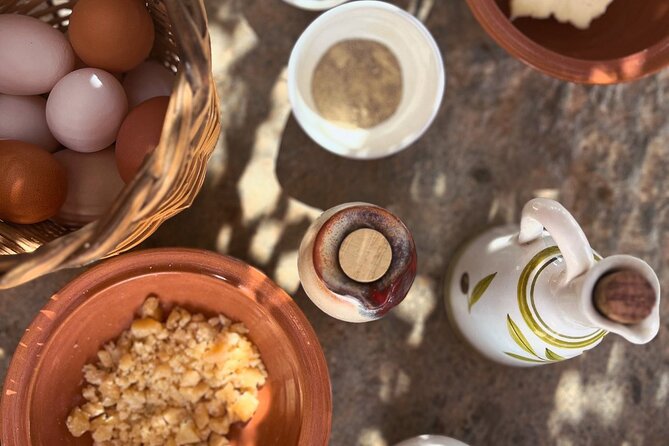
- Pick ingredients and cook like locals do on a stone stove, with help from a grandma figure in the Haros family setup
- Cheese tasting built around local pairings, including honey, homemade fig marmalade, breadsticks, tomatoes, and olive oil
- You get the farm-to-table context, including an olive grove visit plus stops at the chicken house and goats
- A guided museum stop that connects rural Ios to life before tourism and modern technology
- Small group energy (max 8) that makes stories and questions actually land
- Guide quality matters here, with Helen praised for being patient, funny, and kind
From farm stops to a stone stove: how the day really flows
This is a morning built around one simple idea: you don’t just eat Ios food, you learn the whole chain. You start at Diaseli Traditional Cheesery & Museum and keep moving through the island’s rural world. That matters because cheese on a Greek island isn’t an accessory. It’s tied to land, animals, seasonal routines, and household traditions.
The timing is also friendly. You’re set for a 9:00 am start and you’ll be done in about 2 hours 30 minutes. It’s short enough to keep your day flexible, but long enough that the activity feels complete: farm visits, cooking, then eating and tasting in proper succession.
And yes, you get a true payoff at the end. When you finish, you take away the meal you cooked in a special box. It’s made for eating later—on the beach or wherever your afternoon leads.
You can also read our reviews of more tours and experiences in Ios.
Diaseli Traditional Cheesery & Museum: start where the story begins
Your day kicks off at the Diaseli Traditional Cheesery & Museum. Even before you reach the cooking part, you’re in the right mindset. This is not a big factory setting meant for quick photos. It’s framed as a lived-in place: a cheesery with a museum component that focuses on rural life.
Here’s why that matters for you: it gives the tasting and cooking context. When you understand how rural communities lived, the food stops feeling like a souvenir. It starts feeling like something that grew from real work and real seasons.
The museum is guided. You’ll see exhibits about rural life on Ios across the centuries. That means you’re not only learning what’s on your plate—you’re learning the “why” behind the ingredients and techniques.
Practical tip: go in ready to ask questions. The day moves at a relaxed pace, and with a small group (maximum 8) it’s much easier to talk than it is on larger tours.
Olive grove, chicken house, and goats: farm time that explains the ingredients
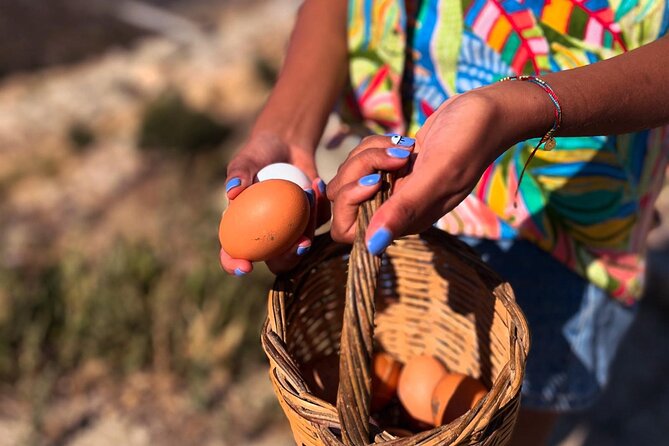
After the initial cheesery-and-museum start, you shift outdoors. You’ll visit a new olive grove, then see areas connected to farm life: a chicken house and goats.
This is one of those moments that can be either impressive or underwhelming, depending on the tone of the tour. In this case, it’s tied directly to what you’ll eat later. You’re not just walking around. You’re building a map in your head: olives lead to olive oil, goats connect to cheese making, and the whole farm rhythm supports the household foods you’ll taste.
Also, this is the part where the morning feels most “real.” The visuals are often what people remember later—views, kept grounds, and a calm, functional beauty to the property. It’s the kind of setting that makes you slow down without being told.
If you get motion-related stomach issues easily, keep your pace steady here. It’s an active morning, even if it’s not a hike.
The cooking class: surprise local dish, real tools, real work
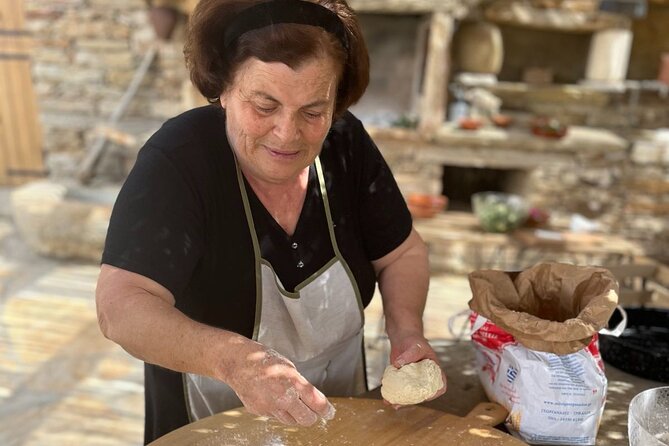
Now the main event: cooking. The experience includes a cooking demonstration of a local surprise dish led by Thia Froso. You’ll help prepare the recipe, and you’ll cook it afterward using a stone stove in the way locals do.
This is where the experience earns its reputation. Hands-on cooking gives you two advantages you don’t get with a standard meal:
- You learn technique, not just taste
- You understand portion, timing, and texture, so your later tasting makes more sense
In this setup, you’re not sent to watch from the sidelines. You help prepare, then you cook. And the tone stays warm and relaxed. One of the best parts is that you’re doing it as part of a family-style experience with the Haros name behind it.
A small detail that makes a big difference: you even get involved in ingredient sourcing on the farm. When you’ve picked and handled ingredients yourself, you notice flavors more clearly during the eating and tasting later. It turns a morning activity into a memory you can taste.
Cheese and wine tasting: what you’ll try and how to pace it
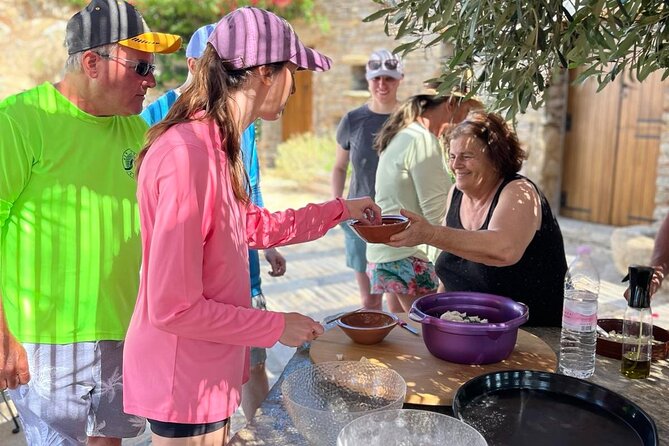
After the cooking, you move into the tasting section. This is the spread that most people come for, and it doesn’t look skimpy. You’ll enjoy:
- about 9 kinds of cheese
- 2 kinds of honey
- homemade fig marmalade
- wine and liqueur paired with dried fruit
- breadsticks and tomatoes with olive oil from the olive trees
That combination is smart. Cheese alone can turn into a blur. Honey and fig marmalade add sweetness that cuts through salt and fat. Tomatoes with olive oil bring acidity and freshness, which helps reset your palate. The wine and liqueur with dried fruit ties the tasting back into Mediterranean pantry logic, where fruit and preservation are normal, not fancy.
How to pace it (so you don’t feel overwhelmed):
- Start with milder cheeses first, then move toward stronger ones.
- Use a small bite of breadsticks between cheese rounds.
- When you try honey or fig marmalade, take a moment. Pairings work best when you’re actually tasting, not just collecting samples.
Also, you’ll likely appreciate the overall flow more if you treat the cooking and tasting as one continuous meal. Finish the cooking taste with snacks and a relaxed pace, then settle in for the tasting. You’re not rushing through. It’s built for eating slowly.
The museum and rural stories: why this part isn’t filler
A lot of tours slap a museum stop onto a schedule and call it “culture.” This one works better because the museum is tied to what you’re doing the rest of the morning. You’re learning about rural Ios through exhibits about life across the centuries, and you see farm elements that match that story.
The result: you leave with a better mental picture. Not just that people made cheese, but that they lived close to land and animals, with household roles and seasonal routines. It’s the kind of understanding that makes your next meal taste more grounded.
One review highlight that fits the tone: the experience can include stories about life before tourism and technology arrived. That kind of detail sticks because it’s specific, and it changes how you read the island in the days after.
If you’re someone who likes explanations, this part will feel like the glue.
Price and value: is $154.88 worth it?
At $154.88 per person, this isn’t the cheapest thing you can do on Ios. But it’s also not a “just eat a platter” deal. You’re paying for several value drivers at once:
- a guided morning with small group size (max 8)
- active ingredient involvement and cooking on a stone stove
- a tasting spread with ~9 cheeses, honey, fig marmalade, wine, liqueur, and more
- a guided museum visit plus farm stops (olive grove, chicken house, goats)
- a takeaway meal box, so you’re not only fed once
In plain terms: you’re getting a full “experience meal,” plus context, plus technique practice. If you love cooking classes, local food, and small-group guides, the cost starts to make sense quickly.
If you only want a casual snack and zero effort, you might feel it’s pricey. But if you like your travel days to include something you can do with your hands, this is the type of price that can feel fair.
Who should book this, and who might skip it
This suits you if:
- you like hands-on food experiences more than show-and-tell
- you want a small-group morning (not a big bus crowd)
- you care about learning local context, especially rural life and farm-to-table connections
- you enjoy wine pairings and cheese variety
You might think twice if:
- you want a passive, low-effort activity
- you dislike eating lots of dairy (even though the tasting includes palate resets like tomatoes and olive oil)
- you’re traveling on days where weather might be shaky, since good weather is required for the experience to run
Should you book the Ios cheese and wine cooking experience?
If you want one morning that combines work, stories, and a serious payoff at the table, I’d book it. This is the kind of tour where the details matter: the cooking happens on a stone stove, the tasting isn’t an afterthought, and the museum ties it together.
The strongest reasons to choose it are the hands-on cooking with Thia Froso, the small group size that keeps things personal, and the guide energy (Helen is highlighted for being patient, funny, and kind). Add the farm visits and the big tasting list, and you’re not just buying food. You’re buying a clear sense of how Ios rural life translates into what ends up on your plate.
FAQ
Where does the experience start?
It starts at Diaseli Traditional Cheesery & Museum, at the Diaseli junction of Psathis-Manganariou, Ios 840 01, Greece.
What time does the tour begin and how long is it?
The start time is 9:00 am. Duration is approximately 2 hours 30 minutes.
How big is the group?
The tour has a maximum of 8 travelers.
What’s included in the experience?
You’ll get snacks and the full experience elements, including the cooking demonstration and cooking on the stone stove, the guided museum component, and the cheese and wine tasting (with honey, fig marmalade, dried fruit, breadsticks, and tomatoes with olive oil).
Is snorkeling equipment included?
No. Use of snorkeling equipment is not included.
What language is the tour offered in?
The experience is offered in English.
What if weather is bad or the tour needs to be canceled?
Good weather is required. If it’s canceled due to poor weather, you’ll be offered a different date or a full refund. The cancellation policy also allows free cancellation up to 24 hours before the experience starts for a full refund.
—
If you want, tell me your travel dates in Ios and whether you’re more into cooking, tasting, or museums—I can help you decide if this fits best with the rest of your day.