REVIEW · AMSTERDAM
Amsterdam Cheese and Wine Canal Cruise
Book on Viator →Operated by Boat Amsterdam · Bookable on Viator
Canals in Amsterdam plus cheese is an instant win. This Amsterdam canal cruise pairs a short, scenic ride with Dutch tastings and live guide commentary, with sights along the Herengracht and Prinsengracht where guides like Ronald, Lex, and Berent keep things funny and clear. You’re not just staring at buildings—you’re getting the story as you pass.
Two things I really like: the cheese-and-drink setup is included (Heineken beer, wine, soda, coffee, and tea), and the portions are described as genuinely generous with cheese plus grapes and crackers/breadsticks depending on the day. The other strong point is the pacing: at about 1 hour, you see a lot of key canal-belt landmarks without feeling like you’ll miss dinner afterward.
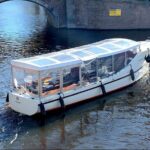
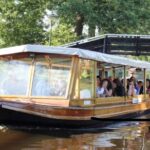
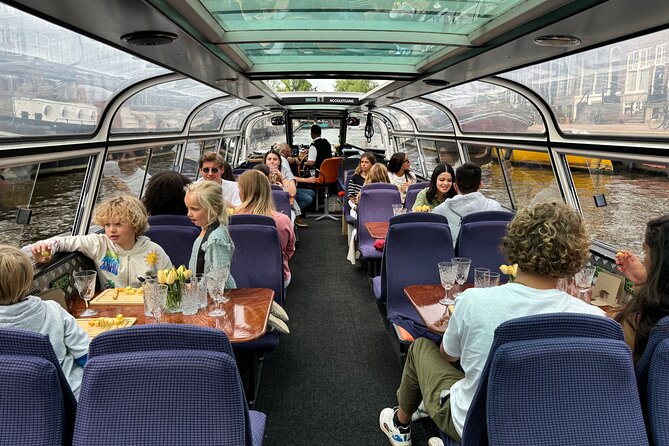
One thing to consider: boat comfort can vary. Some experiences sound more open-air than the glossy photos, with less shade and fewer built-in tables/space for holding your board safely—so if you need sun protection or a more sheltered setup, ask ahead what the boat will be like.
In This Review
- Quick key points before you book
- How the 1-hour cheese-and-wine canal cruise actually plays
- Herengracht: start with the classic canal-belt look
- Reguliersgracht’s seven-bridges view (the part people talk about)
- Jordaan: why this neighborhood looks different from the rest
- Prinsengracht and Anne Frank’s address: a sobering stop
- Westerkerk tower (and why its height matters)
- The canal-belt basics: UNESCO’s numbers you’ll actually remember
- Magere Brug (Skinny Bridge) and Blauwbrug (Blue Bridge): old designs, new meaning
- Amstel Church and the Hermitage: when the cruise turns cultural
- What’s included in the cheese-and-drink part (and how to get the most)
- Price and value: why $45 can feel like a bargain
- Boat comfort, weather, and what to ask before you go
- Who this tour suits best (and who should skip it)
- Should you book? My take
- FAQ
- How long is the Amsterdam Cheese and Wine Canal Cruise?
- What drinks and food are included?
- Is the tour guided, and what language is it in?
- Where do I meet for the cruise?
- Is there a mobile ticket?
- Can I get a full refund if I cancel?
Quick key points before you book
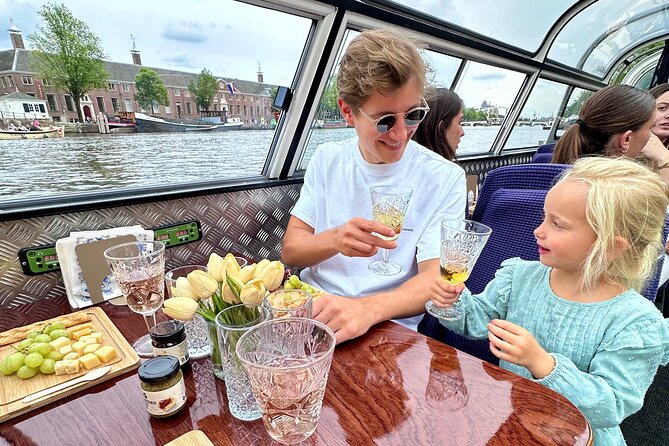
- Heinecht on board: Dutch cheeses plus drinks like Heineken beer, wine, soda, coffee, and tea.
- A camera-ready canal stretch: the Reguliersgracht seven-bridges view in one long look.
- Big Amsterdam sights, close up: Westerkerk (87m tower) and the Anne Frank-linked Prinsengracht area.
- World-famous bridges on your route: Magere Brug (Skinny Bridge) and Blauwbrug (Blue Bridge).
- Small-group feel by design: capped at 36 travelers, which often makes the vibe calmer.
- Boat style may differ: if you care about shade, tables, or enclosure, confirm the exact boat setup.
How the 1-hour cheese-and-wine canal cruise actually plays
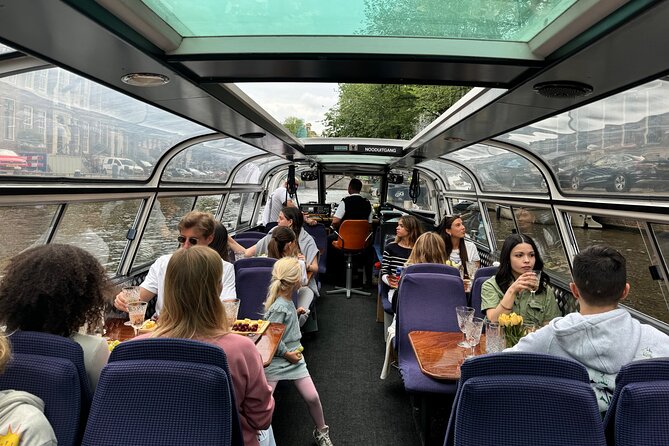
This is a short Amsterdam canal cruise built around one simple idea: you get the best views of the canal belt, and you get something to eat and sip while you’re doing it. Plan on about 1 hour on the water. It’s also the kind of activity that works well on a first or second day, because you’ll come away with a mental map fast—especially around the canal belt.
The cruise runs with an in-person English guide (and you may hear Dutch as well). That matters because the canal belt can look like the same pretty canal over and over—until someone points out what makes each stretch different. You’ll also hear explanations as you move between neighborhoods and landmarks instead of standing still, reading plaques, and pretending your neck can handle it.
The value question is easy here: the price is low enough that you’re not paying just for sightseeing. At $45.01 per person, you’re paying for the boat ride plus an included tasting experience with cheese and multiple drink options. In a city where food tours can get expensive quickly, that’s a real plus.
You can also read our reviews of more tours and experiences in Amsterdam.


Herengracht: start with the classic canal-belt look
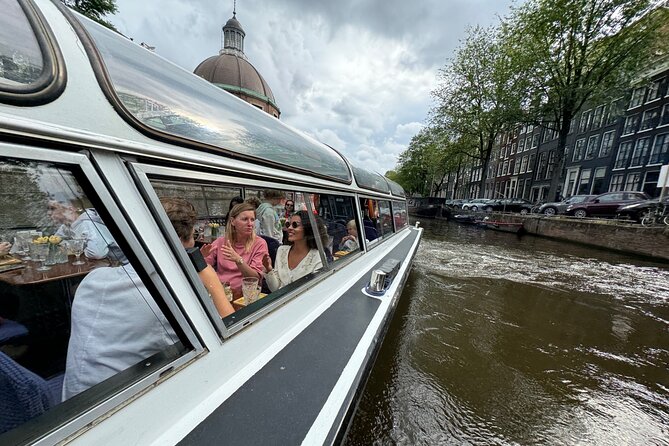
Your ride begins through the Herengracht, one of the most iconic parts of Amsterdam’s canal belt. This is where the city’s old wealth shows up in the architecture: stately homes, strong lines, and that calm canal-water rhythm that makes Amsterdam feel slow in the best way.
Why this matters to you: Herengracht is the easy “wow” start. It’s the stretch that helps you understand why people still call these canals a World Heritage Site. And if this is your first canal cruise, starting here sets a baseline—so later, when you pass more modest canals, you’ll actually notice the differences.
You’ll also appreciate the way a cruise covers ground. On foot, you hop across bridges and backtrack to link viewpoints. On water, you glide through the canal belt’s backbone in one go.
Reguliersgracht’s seven-bridges view (the part people talk about)
One stop is pure sightseeing math: Reguliersgracht (7 BRIDGES). This is described as the only place in Amsterdam’s canals where you can see seven bridges in a single view.
Here’s the practical angle. The canal belt is full of bridges, but only a few locations give you a clean long perspective. From the water, you’re lined up perfectly for the “one after the other” look. If you care about photos, this is the moment to keep your phone ready and ignore your hunger for about 30 seconds.
Also, this stop gives the guide a chance to tie the bridge shapes to how the city functioned. Bridges weren’t just decoration. They were the plumbing of daily movement—work, shopping, and getting from one side of the water to the other.
Jordaan: why this neighborhood looks different from the rest
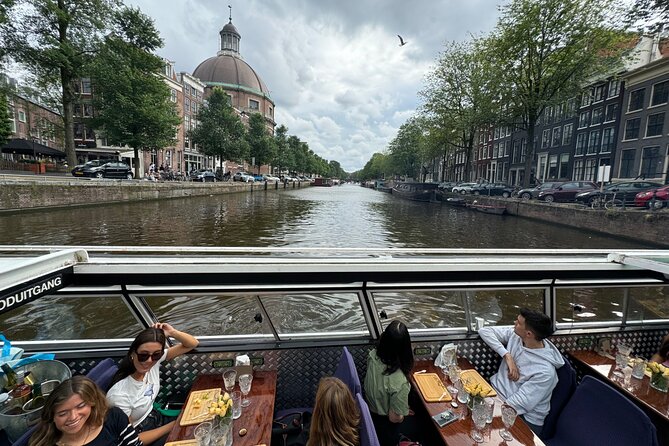
Next comes the Jordaan area, with the cruise moving along the canal toward de Jordaan. This neighborhood has an origin story tied to cost and class. It was designed for Amsterdam’s growing working class, and the name connects to the French word jardin, meaning garden—reflected in the street names that reference plants and trees.
From the boat, what you’ll likely notice is the change in scale and layout. The houses are smaller, and the streets don’t follow the same pattern as the rest of the canal belt. The reason given is practical: the streets follow an old ditch pattern already there, keeping costs down.
Why this is more than trivia: it helps you stop treating the city like one single “pretty canal district.” Amsterdam’s canal belt is a patchwork of different eras and different needs. The Jordaan stretch is where that becomes visible.
Prinsengracht and Anne Frank’s address: a sobering stop
Then you’ll cruise past Prinsengracht #263, linked to Anne Frank—the former home connected to her diary Het Achterhuis. This is the point where the story of the Frank family hiding during World War II connects directly to the city’s real streets.
It’s important to approach this stop with the right mood. This is not a “cute canal house” moment. It’s a historic location tied to persecution and hiding. If you’re traveling with kids, you might want to keep your expectations realistic: the guide may mention the basics, but it won’t replace the deeper context you’ll get at museums or guided visits designed for that.
What you do get on the cruise is perspective. Seeing the building frontage and canal edge from the water makes the hiding story feel more grounded—less like a book image and more like a specific place in a specific city.
- Zaanse Schans Windmills, Clogs and Dutch Cheese Small-Group Tour from Amsterdam
★ 4.5 · 2,369 reviews

Westerkerk tower (and why its height matters)
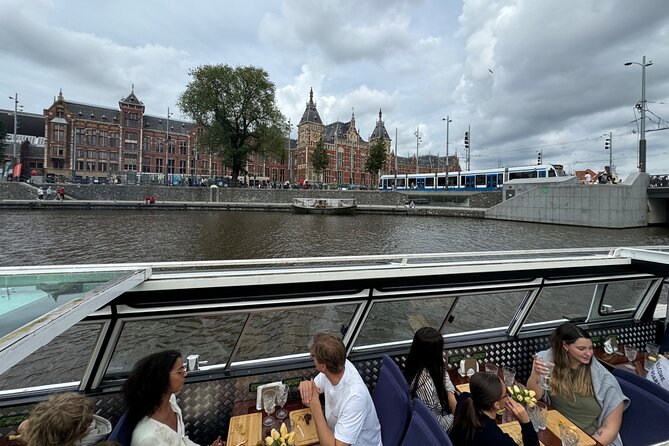
Another landmark on your route is the Westerchurch, or Westerkerk (built between 1620–1631 in Renaissance style). The famous part is the tower: at 87 meters, it’s the highest church tower in Amsterdam.
There’s also a direct diary connection. The imperial crown on top is discussed in the same breath as Anne Frank’s writings, and the crown details connect back to a gift from Maximilian I. The guide also explains the significance: the crown ties to Amsterdam’s role in European politics and trade.
Practical takeaway for you: Westerkerk is one of those landmarks that anchors the view. When you spot it from the water, you can “read” where you are in the canal belt much faster. It’s like a visual compass.
The canal-belt basics: UNESCO’s numbers you’ll actually remember
The guide is likely to point out that the canal belt is UNESCO World Heritage-listed (since 2008). And then you get a few big numbers that make the scale real:
- 165 canals
- About 100 km total length
- Average depth around 2.6 meters
- 1,680 bridges across the system (Venice has 400)
Why I like hearing this on a cruise: it turns a “pretty place” into an engineered system. You start thinking about water management, bridges, and how the city grew around the canals instead of along them.
If you’re short on time in Amsterdam, these facts stick because you hear them while you’re physically moving through the place.
Magere Brug (Skinny Bridge) and Blauwbrug (Blue Bridge): old designs, new meaning
Two bridges close the show in a classic Amsterdam way.
First up is Magere Brug (Skinny Bridge). It’s described as the oldest still working, partly wooden drawbridge in Amsterdam and a National Monument. The key detail is how it was originally designed: the city council was short on money, so they built a cheaper, narrow bridge (wood instead of stone) that was nicknamed Skinny because people had to squeeze past each other.
The current bridge dates from 1934, and car traffic hasn’t been allowed since 2003. It’s also famous in pop culture, mentioned as a setting for films including James Bond.
Then you’ll get Blauwbrug (Blue Bridge), named for an older predecessor with blue railings. The current bridge dates to 1883, inspired by the Pont Neuf in Paris. It also shares the imperial crown theme—linked to the same kind of historical symbolism you hear about at Westerkerk and in the city arms.
Why these bridges matter for your trip: they’re not just landmarks. They show how Amsterdam solved practical problems (crossing, shipping, cost) and then turned those solutions into iconic design. From the water, you also get a better sense of how drawbridges fit into daily life.
Amstel Church and the Hermitage: when the cruise turns cultural
Not all stops are about canals and bridges. You’ll also pass by:
AMSTEL CHURCH (1668), built originally as a wooden temporary church for residents during the canal belt’s early growth. The permanent stone plans didn’t happen, so the “temporary” church is still there after almost 350 years. Today it hosts cultural events.
And then the Hermitage Museum, located in the Amstelhof building. The building dates from 1681 and was originally a nursing home for around 300 years. It became a museum in 2007 and is an annex of the Hermitage in Saint Petersburg, sharing part of its art collection.
If art museums are your thing, it’s a nice teaser. If not, it still helps you see Amsterdam as more than architecture photos.
What’s included in the cheese-and-drink part (and how to get the most)
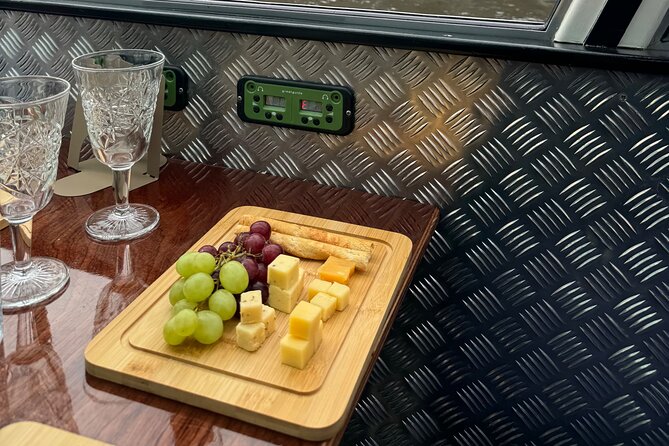
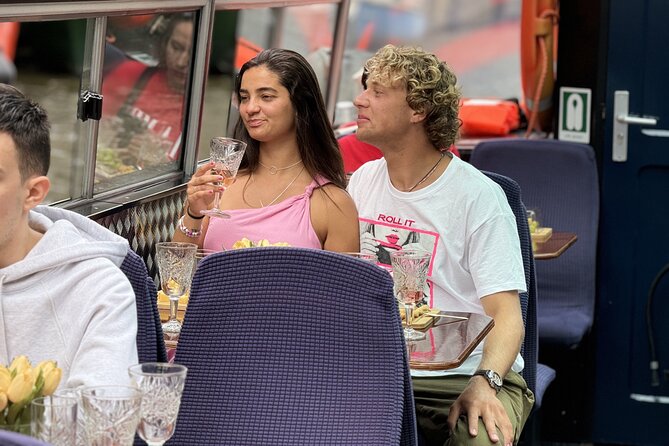
The cruise includes a selection of Dutch cheeses plus alcoholic drinks and non-alcoholic options. Alcohol options listed are Heineken beer and wine. You also get soda, coffee, and tea.
A few practical points for your enjoyment:
- If you want variety, don’t only grab the first pour. The program is built around pairing, not just chugging.
- Cheese works best when you pace it. This is an hour-long cruise, so you’ll feel rushed if you eat everything early.
- If you’re sensitive to sun, keep an eye on where you’re sitting. Some boats seem more open-air than others based on what people describe, so don’t assume you’ll have full shade.
Many people also mention accompaniments like grapes and crackers/breadsticks. Even if the exact selection changes, the idea stays the same: you should leave with a snack that feels like an actual food experience, not a token bite.
Price and value: why $45 can feel like a bargain
At $45.01 per person, this is priced like a budget canal cruise—until you remember that the tasting is included. You’re getting:
- a guided canal ride
- cheese
- multiple drink types (beer/wine plus non-alcoholic options)
That’s why I think the value is real. You’re not separately paying for a drink at a canal-side bar, and you’re not hunting down a food stop mid-day.
The other value lever is the small-group size: up to 36 travelers. Even if your boat isn’t private, smaller groups usually mean you can hear the guide better and get more natural photo moments.
Still, a fair warning: the negative experiences in the mix suggest that boat style can vary. Some people felt the “luxury” feel wasn’t guaranteed. So think of the cruise as a fun food-and-sights activity, not a guaranteed high-end glassy yacht.
Boat comfort, weather, and what to ask before you go
Amsterdam canals can be breezy even when the air is mild. If you run hot, you’ll be fine. If you get cold easily, plan for it.
Here’s what you should check before booking if comfort matters:
- Ask what the boat enclosure/roof situation is.
- Ask whether there will be tables or a stable setup for a cheese board and drinks.
- If you need shade for health reasons, ask if there are covered seating areas.
Also, some people mention their boat felt more like a simple open-air setup and that it didn’t include a toilet. That’s not stated as a standard feature either way, so treat it as a “confirm if it matters to you” item.
Your best move: message or call the provider with a plain question like, What does the seating and roof look like on the boat you’ll use for my departure? That one question can save you stress.
Who this tour suits best (and who should skip it)
This is a strong fit if you want:
- an easy first-time canal cruise
- a food-and-drink component without planning extra stops
- classic Amsterdam sights in a short time window
- a guide who connects buildings to street-level meaning
You might skip it if:
- you need a very specific boat setup (fully enclosed glass roof, tables, lots of sun protection) and you’re not able to confirm it
- you’re looking for a deep museum-style Anne Frank experience (this is a pass-by with context, not a full visit)
Should you book? My take
I think this cruise is worth your time if you want a laid-back Amsterdam evening (or daytime) that mixes canal views, guided storytelling, and included Dutch cheese plus drinks. It’s also a smart value move for couples or solo travelers who don’t want to make separate plans for food and sightseeing.
Book it if you like the idea of hitting Herengracht, Jordaan, Prinsengracht, and the bridge-and-church highlights in about an hour, with the guide doing the heavy lifting on context. Just do one thing first: confirm the boat comfort details if you’re picky about shade or need a specific seating setup.
If you’re also flexible with timing, you’ll likely find the experience easiest when you’re not racing between museum tickets. This works best as a calm, central Amsterdam activity.
FAQ
How long is the Amsterdam Cheese and Wine Canal Cruise?
It’s listed as approximately 1 hour.
What drinks and food are included?
You get Dutch cheeses and drinks including Heineken beer, wine, sodas, coffee, and tea.
Is the tour guided, and what language is it in?
Yes. It includes an in-person English guide (and Dutch is also offered).
Where do I meet for the cruise?
The meeting point is Amstel 51F, 1018 EJ Amsterdam, Netherlands.
Is there a mobile ticket?
Yes, the tour includes a mobile ticket.
Can I get a full refund if I cancel?
Yes. Free cancellation is available up to 24 hours before the experience start time for a full refund.
You Might Also Enjoy


More Tour Reviews in Amsterdam
- Zaanse Schans Windmills, Clogs and Dutch Cheese Small-Group Tour from Amsterdam
★ 4.5 · 2,369 reviews