REVIEW · AMSTERDAM
Amsterdam: Evening Candle Light Cruise With Wine & Cheese
Book on Viator →Operated by Starboard Boats · Bookable on Viator
A night on the canals makes Amsterdam click fast. This evening candlelight cruise mixes iconic canal views with a local-style history tour as you glide past the Red Light District, Gothic landmarks, and photo-worthy bridges. I like the small-group feel, and I also like how the route covers a lot without making your evening feel rushed.
Two things I really like: the onboard guide/pilot approach (friendly, informative) and the way the boat experience is built for evening light—so the canals look good, not just the buildings. One possible drawback to keep in mind: if you picked this for an open-boat look, a roofed setup on at least one departure can reduce visibility at times, especially for photos.
In practice, this is a fun “great hits” cruise when you want Amsterdam to feel manageable, romantic, and packed with landmarks—without spending your whole night walking.
In This Review
- Key highlights at a glance
- How This Candlelight Cruise Fits an Amsterdam Evening
- Price and What You’re Really Paying For
- Meeting at Oudezijds Voorburgwal: Timing and the 1-Hour “Great Hits” Format
- Small Group Energy and the Electric Boat Factor
- The Sights Route: What You’ll See Along Amsterdam’s Canals
- Red Light District from the water
- A Gothic landmark: the city’s oldest surviving building
- Sea Palace Restaurant: Chinese food on the water
- NEMO Science Museum and Renzo Piano’s green copper curve
- Waterlooplein and the Jodenmarkt connection
- Stopera: town hall meets opera
- Dancing Houses near Damrak
- Herengracht and Prinsengracht: two classic canal identities
- De Zeven Bruggen (Seven Bridges) in Jordaan
- Amstel River: the wider water connection
- Magere Brug (Skinny Bridge): the story behind the bridge
- Rokin: central street energy near key landmarks
- Wine & Cheese and the Drinks Reality Check
- What I’d Watch For on This Cruise (Based on Real-World Feedback)
- Photo, Seating, and How to Get the Best Canal-Light Shots
- Who This Cruise Is Best For
- Should You Book This Amsterdam Evening Candle Light Cruise?
- FAQ
- FAQ
- How long is the Amsterdam evening candlelight cruise?
- How much does it cost?
- Is the tour in English?
- Do I get a mobile ticket?
- What sights will we see during the cruise?
- Where does the cruise start and end?
- Is there a drink and food component?
- What’s the group size?
- What’s the cancellation policy if plans change?
- When should I book if I want to get a spot?
Key highlights at a glance
- A 1-hour route that hits the big icons without dragging your plans into late-night crowds
- Evening candlelight vibes paired with a guided story of what you’re seeing
- Small group size (up to 25) for a more personal feel
- Canal highlights like Magere Brug and the Sevenbridges that look especially good after dark
- Wine-and-cheese on the ticket theme, plus a drink setup that can be strong for cold refreshments
How This Candlelight Cruise Fits an Amsterdam Evening
Amsterdam can be a lot in a single day. A canal cruise solves that problem because it puts several “must-see” areas on one moving line, so you don’t have to choose between landmarks.
This one is designed for the evening. Candlelight mood plus nighttime reflections on the water makes even a short sail feel like a special event rather than just transportation. It’s also a smart option if you’re staying for a limited time and want the city’s highlights in one sitting.
You can also read our reviews of more tours and experiences in Amsterdam.


Price and What You’re Really Paying For
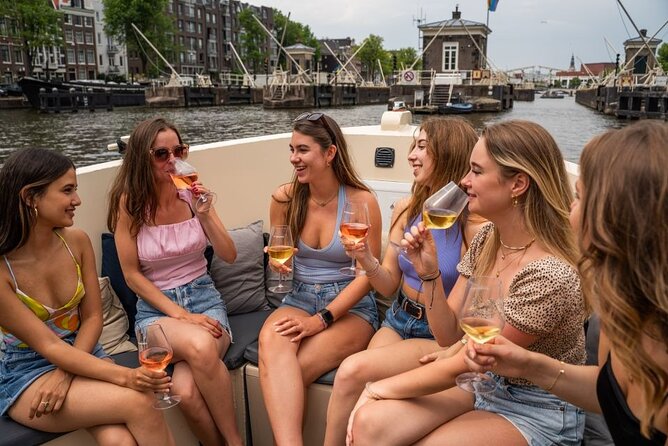
At $27.63 per person for about an hour, this isn’t a cheap snack-and-sit cruise. You’re paying for three things: a guided narration, a planned route through high-interest neighborhoods, and a boat ride that works well at night.
The best value move is to treat this as orientation and memory-making. You’re not just buying a view—you’re building a mental map of Amsterdam: where the canals sit, which bridges are famous for a reason, and how certain neighborhoods fit into the broader city story.
Meeting at Oudezijds Voorburgwal: Timing and the 1-Hour “Great Hits” Format
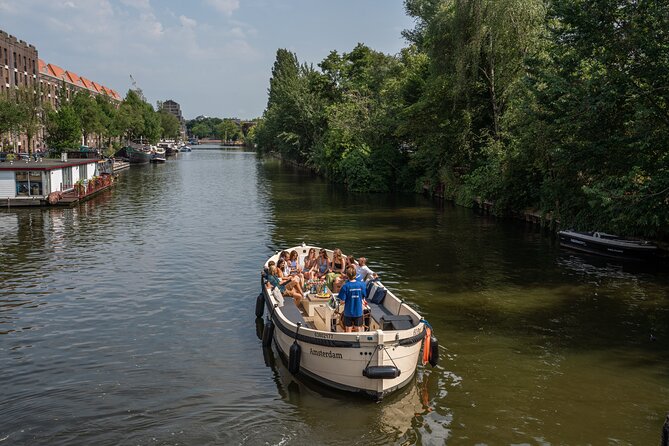
The cruise meets at Oudezijds Voorburgwal 230 (near public transportation), and it ends back where you start. With an experience time of roughly 1 hour, you’ll feel the pacing as “compact and efficient.” That’s great for first-timers, but it also means you won’t have time for long shore stops.
This format rewards travelers who are ready to watch, listen, and photograph while you move. If you’re the type who prefers slow strolling, you might find the pace a touch brisk—but for most visitors, it’s exactly what makes the cruise feel worth it.
Small Group Energy and the Electric Boat Factor
The group max is 25 people, which matters more than it sounds. Smaller groups tend to feel less chaotic, and you get better chances to hear the guide/pilot narration clearly.
You’ll also want to know the boat is electric. That’s a practical plus for an evening cruise because the ride feels smooth and modern, and the overall experience can feel more comfortable than older engine setups.
The Sights Route: What You’ll See Along Amsterdam’s Canals
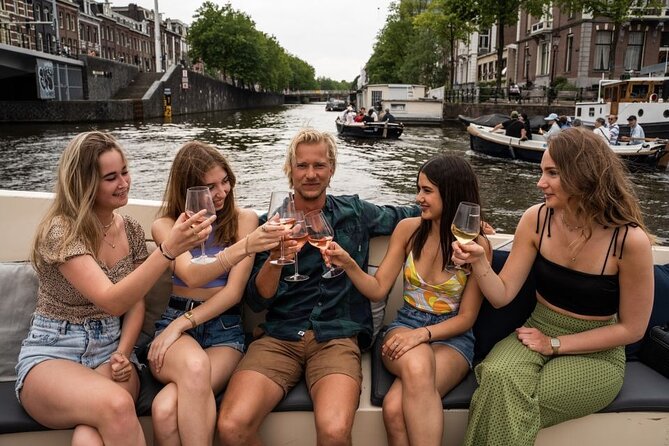
The route is built like a highlights reel, with a steady flow of neighborhoods and landmarks. Expect a mix of old Amsterdam, working-city landmarks, and the kind of architecture that turns a canal walk into a puzzle.
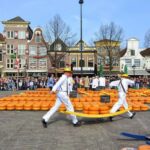
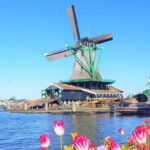
- Zaanse Schans Windmills, Clogs and Dutch Cheese Small-Group Tour from Amsterdam
★ 4.5 · 2,369 reviews

Red Light District from the water
You start by cruising through the heart of Amsterdam along the Red Light District. From the canal, you get a unique vantage point on the narrow streets and the famous red-lit windows—an area that’s controversial, historic, and very much part of the city’s modern identity.
If you’re sensitive to the theme, keep your expectations grounded. This isn’t a lecture that avoids the subject, but it’s also not the kind of tour that tries to shock—you’re there to see and understand how Amsterdam has evolved around this district.
A Gothic landmark: the city’s oldest surviving building
Next up is an ancient structure with Gothic architecture, described as the oldest surviving building in the city. Seeing it from the water is a handy reminder that Amsterdam’s history isn’t just in museums—it’s right in the skyline and the street corners.
This stop works well because Gothic stonework can look dramatic when light hits it at night, and the canal angle makes the building feel more layered than it does from street level.
Sea Palace Restaurant: Chinese food on the water
You’ll also glide by Sea Palace Restaurant, known for its floating setting and pagoda-style look. The idea here is fun: it’s a restaurant concept you can’t really recreate anywhere else, and it adds variety to the scenery between classic canal views.
If you like food culture, this is the kind of pass-by detail that helps you remember Amsterdam as more than bridges and museums. It’s also a good cue for what kinds of dining options pop up around waterways in the city.
NEMO Science Museum and Renzo Piano’s green copper curve
NEMO Science Museum is one of the most noticeable buildings along the route, with a green copper façade designed by Renzo Piano. The curved shape has a “hull-like” feel, and the maritime reference helps connect Amsterdam’s science and playfulness to its long relationship with water and ships.
Even if science museums aren’t your thing, the architecture is worth the look. It’s the kind of stop where you might pull out your phone without thinking, because the building practically demands a photo.
Waterlooplein and the Jodenmarkt connection
As you pass Waterlooplein, you’re looking at an area whose role stretches back to the late 19th century. It was used as an open square for various activities, including a Jewish market area known as Jodenmarkt, where trade and second-hand goods played a big role.
This is one of the more meaningful segments because it anchors the city’s everyday commerce and community life. It also gives you context for Amsterdam’s neighborhoods as living places, not just scenic backdrops.
Stopera: town hall meets opera
You’ll cruise past the Stopera, a cultural complex that houses the city hall (Stadhuis) and the Dutch National Opera & Ballet. The word Stopera blends those two functions, and that dual-purpose design is a big part of why this building is so recognizable.
This works well on a cruise because you get a broad view without needing to stand in front of the façade. It helps you understand that Amsterdam’s “center” isn’t only about canals—it’s also civic life and performing arts.
Dancing Houses near Damrak
The Dancing Houses are crooked historic houses near Damrak, not far from Amsterdam Central Station. They’re iconic in the way they look wrong in a delightful way—crooked shapes that stand out immediately against straighter architecture.
From the canal, you also get a different perspective on their angles. If you’re a photographer, this is the kind of place where you’ll want to keep your camera ready because it’s easy to miss the full “dancing” effect while walking past.
Herengracht and Prinsengracht: two classic canal identities
Herengracht is described as offering a glimpse into the soul of Amsterdam—where history, beauty, and contemporary life mix along the water. Prinsengracht is treated as a symbol of cultural heritage and the city’s creative spirit.
These segments aren’t one single “thing” to stare at; they’re the feel of Amsterdam in motion. The value is in comparison: you’ll notice how canal streets and façades change as you move, and that helps you understand how the city’s layout became its identity.
De Zeven Bruggen (Seven Bridges) in Jordaan
The Sevenbridges area—De Zeven Bruggen—is known for seven bridges in a harmonious arrangement in the Jordaan neighborhood. It’s basically a “pattern moment” where the canal network becomes visual design.
This is a great spot for night views because multiple bridges create multiple reflection points. That’s why the area tends to photograph well after dark.
Amstel River: the wider water connection
You’ll also pass the Amstel River, a major waterway that shapes Amsterdam’s history and identity. Unlike the city canals, the river gives you a bigger-scope feeling, reminding you that Amsterdam isn’t floating in a vacuum—it’s part of a whole water system.
If you’ve been wondering why so many parts of Amsterdam are canal-connected, this section gives you the “why” behind the layout.
Magere Brug (Skinny Bridge): the story behind the bridge
One of the most famous segments is Magere Brug, also called the Skinny Bridge. The name refers to its original design, and the bridge began as a wooden drawbridge in 1670, then got replaced and rebuilt over time into the elegant structure you see today.
This stop is perfect for candlelight because the bridge and the reflections create a classic Amsterdam “postcard moment.” Even if you’ve seen it online, seeing it glide-by style makes it feel more human and less like a flat photo.
Rokin: central street energy near key landmarks
Toward the city center, Rokin runs between Dam Square and Muntplein, where the Munttoren (Mint Tower) stands. Rokin is lively in terms of urban activity, and passing it from the water makes it feel like you’re cutting through the center rather than approaching it by foot.
If your main goal is to understand Amsterdam quickly, this section helps you link the canal world to the city square world.
Wine & Cheese and the Drinks Reality Check
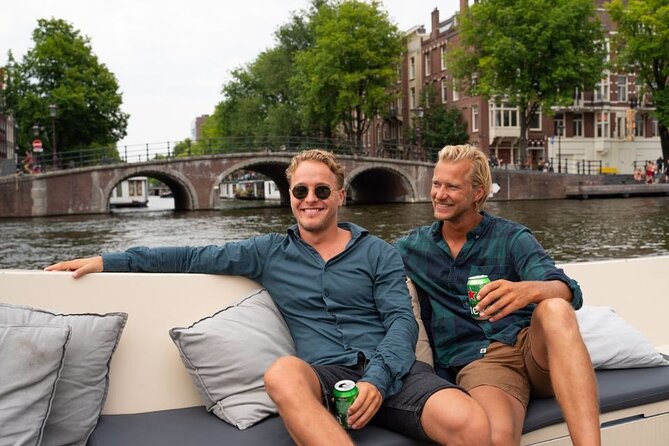
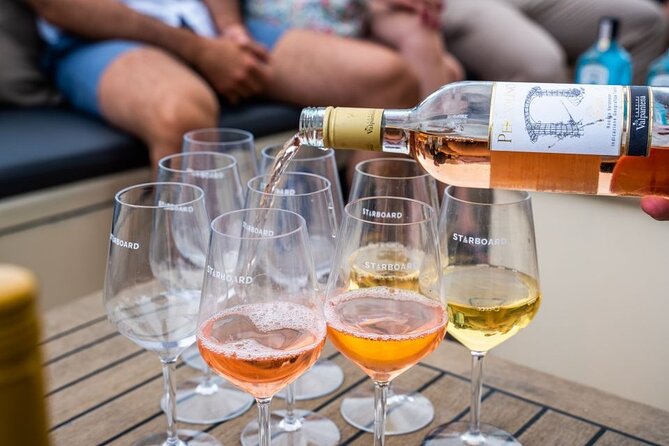
The cruise is advertised as an evening candlelight experience with wine & cheese. That concept is appealing because it turns a sightseeing activity into an occasion.
That said, one review notes a miscommunication that left the cheese aspect out during a cheese-and-wine trip. Another comment suggests drink selection could have been stronger, while a different review praises unlimited cold drinks.
So here’s my practical advice: treat the cruise as the main event, and think of wine-and-cheese as a bonus that matches the theme. If drinks matter a lot to you, you’ll likely want to keep expectations focused on cold refreshments and the overall onboard experience rather than assuming a perfect cheese-and-wine platter every single time.
What I’d Watch For on This Cruise (Based on Real-World Feedback)
Two issues are worth flagging, because they affect how enjoyable the views feel.
First: boat appearance and visibility. One review says the boat wasn’t open like some images suggest; it had a roof that limited visibility. If you plan to rely on unobstructed views for photos, that’s a key detail to consider.
Second: timing and check-in accuracy. One experience described an apparent booking mismatch on arrival. It doesn’t mean it happens often, but it does mean you should treat your confirmation details carefully and arrive with buffer time so you’re not dealing with last-minute confusion.
If you’re the type who gets stressed by that kind of uncertainty, keep your plans flexible and bring a calm attitude. This is a relaxed evening cruise when things go smoothly—and when they do, the views and stories are the payoff.
Photo, Seating, and How to Get the Best Canal-Light Shots
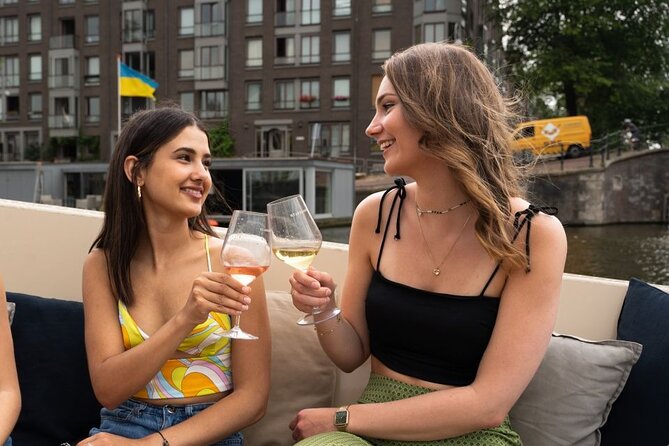
Night photography can be tricky, but this kind of cruise helps because the reflections do a lot of the work for you. The bridge segments—especially Magere Brug and the Sevenbridges area—tend to create the most dramatic lighting effects.
If your boat has a roof, visibility can be reduced depending on where you sit. I’d prioritize choosing a spot where you can see forward and outward, not just down into your lap. Bring a lens cloth or wipe, too—because boats and waterways can mean mist or spray.
Also, don’t only focus on the buildings. Try to photograph the canal reflections. Amsterdam at night has a look that’s more about light on water than about skyline alone.
Who This Cruise Is Best For
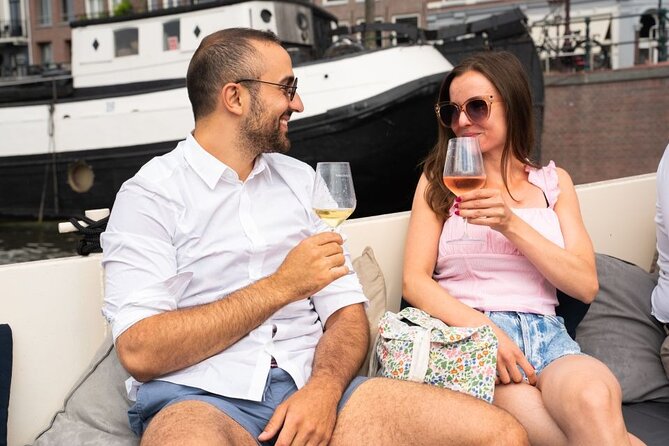
This is a strong match for:
- First-timers who want high-efficiency sightseeing in about an hour
- Visitors who want a guided history layer without doing a full walking tour
- Travelers celebrating something small (birthday, anniversary, just a nice night)
- People who don’t want to think too hard about transit between neighborhoods
It might be less ideal for you if:
- You need a fully open-deck view for photos (a roof can change that experience)
- You’re very picky about the exact wine-and-cheese service
- You want time to stop and explore on foot at each landmark
Should You Book This Amsterdam Evening Candle Light Cruise?
I’d recommend booking this if your priority is a short, well-paced canal experience that covers the city’s biggest hits. The combination of nighttime ambiance, small group size (up to 25), and a friendly onboard guide/pilot approach makes it feel like more than just sightseeing from a seat.
If you’re booking because you want maximum photographic visibility, do one thing before you go: set expectations about the boat setup. A roofed configuration can make a difference, even on a night when the lights are at their best.
If your main goal is to get your bearings and enjoy Amsterdam’s glow, this cruise is a practical choice—and at $27.63 for about an hour, it’s hard to beat as a “one evening, many landmarks” plan.
FAQ
FAQ
How long is the Amsterdam evening candlelight cruise?
The tour lasts about 1 hour.
How much does it cost?
It costs $27.63 per person.
Is the tour in English?
Yes, it’s offered in English.
Do I get a mobile ticket?
Yes. You’ll receive a mobile ticket.
What sights will we see during the cruise?
You’ll pass major Amsterdam highlights such as the Red Light District, the Gothic oldest surviving building area, NEMO Science Museum, Stopera, the Dancing Houses, and well-known canal segments including Herengracht, Prinsengracht, De Zeven Bruggen (Sevenbridges), Magere Brug (Skinny Bridge), plus areas around Damrak, Rokin, and the Amstel River.
Where does the cruise start and end?
It starts at Oudezijds Voorburgwal 230, 1012 GJ Amsterdam, Netherlands, and ends back at the same meeting point.
Is there a drink and food component?
The experience is themed as wine & cheese. One comment noted cheese wasn’t included in a cheese-and-wine setup, so it’s smart to expect wine-and-cheese as part of the concept but treat the cruise views as the main value.
What’s the group size?
The tour has a maximum of 25 travelers.
What’s the cancellation policy if plans change?
Free cancellation is available up to 24 hours in advance for a full refund.
When should I book if I want to get a spot?
On average, it’s booked about 25 days in advance, so booking ahead is a good idea.
You Might Also Enjoy



More Tour Reviews in Amsterdam
- Zaanse Schans Windmills, Clogs and Dutch Cheese Small-Group Tour from Amsterdam
★ 4.5 · 2,369 reviews