REVIEW · FLORENCE
Florence: Mozzarella Cheese Making with Wine and food Tastings
Book on Viator →Operated by Ciao Florence Tours Srl · Bookable on Viator
Mozzarella gets serious in Florence. This 2-hour class turns fresh curds into real cheese shapes, then pairs what you make with Prosecco and a guided tasting. It’s hands-on, food-first, and very Florence: simple ingredients, careful technique, and lots of smiling.
What I like most is how Jess and Giuseppe guide you step by step, so the process feels doable even if you don’t cook much. I also love the way the tasting isn’t random: you’re guided through pairings that match what’s on your plate, including ideas like stracciatella with bottarga and lemon zest.
One possible drawback: since the experience starts with Prosecco and includes a wine tasting, it may not be ideal if you prefer to avoid alcohol (unless you plan to just taste lightly or ask ahead).
In This Review
- Key highlights you’ll feel fast
- Prosecco meets hands-on mozzarella on Via de’ Ginori
- Making bocconcini, nodini, and treccine like a real kitchen task
- Burrata and stracciatella: where the creamy center becomes the lesson
- Wine tasting: organic plus conventional, paired to what you made
- What you eat after the class (and why it’s part of the deal)
- Price and value in Florence: a small-group class that feeds you
- Who this is for (and who should think twice)
- Food needs: vegetarian, gluten-free, and timing reality
- Should you book this mozzarella and wine class in Florence?
- FAQ
- How long is the mozzarella cheese making class?
- Where do you meet in Florence?
- Is the tour offered in English?
- Is it vegetarian or gluten-free friendly?
- What’s the group size?
- Can I change or cancel my booking?
Key highlights you’ll feel fast
- Prosecco kickoff before you touch anything, so the class starts with a win
- Small group (max 12), which means more time watching, shaping, and asking questions
- Hands-on mozzarella styles like bocconcini, nodini, and treccine, not just one shape
- Burrata and stracciatella practice, with creamy textures that stand out the minute you spoon them
- Wine tasting with both organic and conventional wines matched to what you made
- You take some mozzarella home, so the experience keeps paying off after the class
Prosecco meets hands-on mozzarella on Via de’ Ginori
The experience begins in central Florence at Via de’ Ginori 55 R, where you meet your chef right in the thick of the city. The vibe is informal and food-focused, with a rustic-chic feel that makes this seem less like a demo and more like you’re joining a real kitchen day.
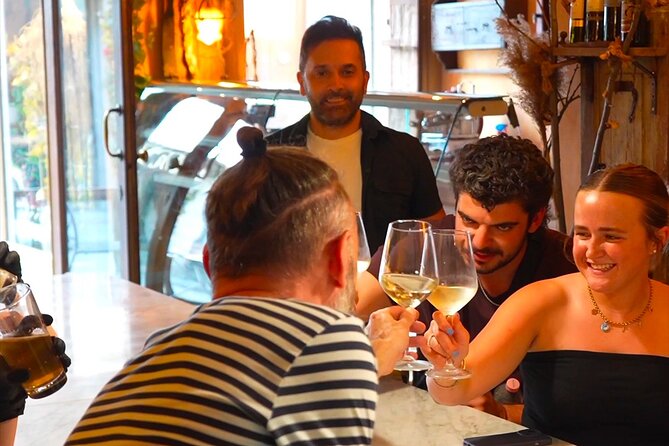
Before you start the cheese work, you get a cold glass of Prosecco. It’s a small detail, but it sets the tone: you’re not just learning a food trick, you’re part of a tasting-oriented evening with plenty to smell, sample, and compare.
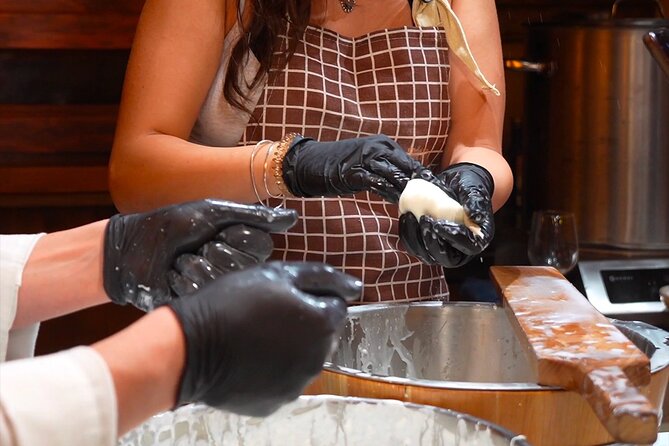
One of the best parts is that the instruction aims for clarity. In the class, you’re shown how to transform curds into neat little bocconcini, then you move on to other shapes like nodini and treccine. That “do it with your hands” approach is what makes the experience worth it, even if you’ve never cooked beyond basic pasta.
You can also read our reviews of more tours and experiences in Florence.
Making bocconcini, nodini, and treccine like a real kitchen task
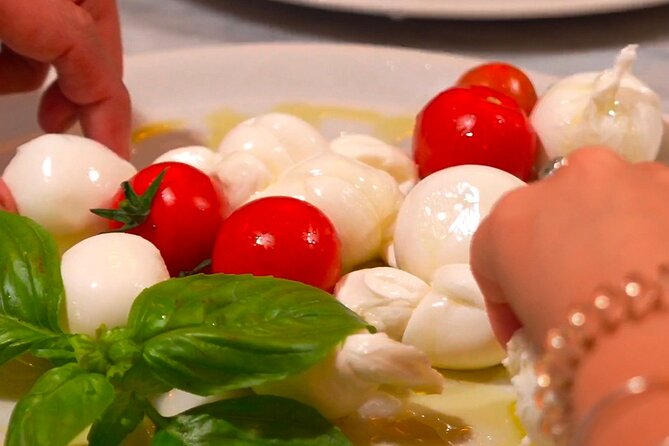
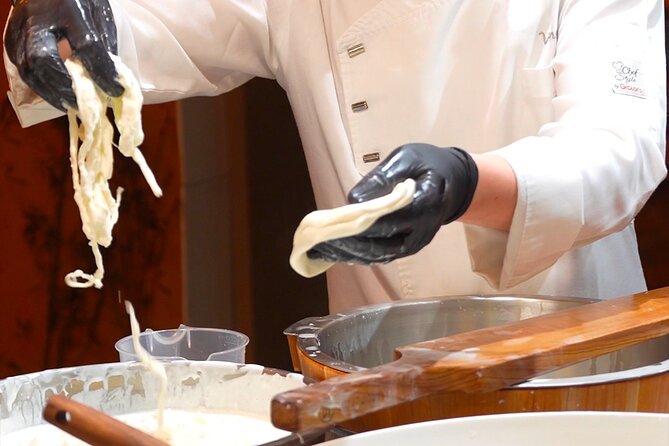
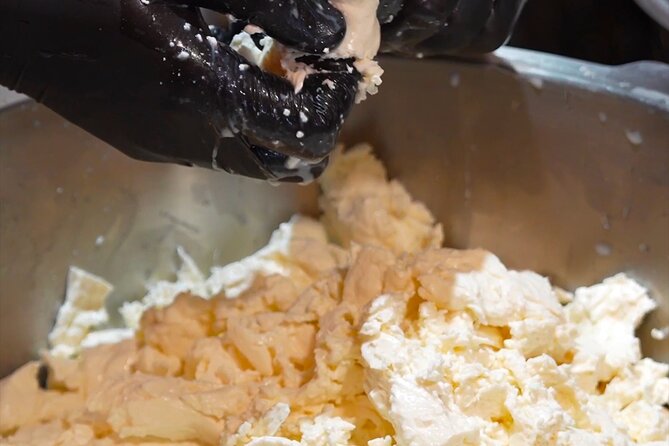
If you’ve ever wondered why fresh mozzarella tastes so different from what comes in plastic, this is where you find the answer. The class walks you through the key steps, starting from the curd stage and building toward the shaping that affects texture and bite.
You’ll learn to form bocconcini first—small, bite-size pieces that feel simple but require good timing and gentle handling. Then you’ll twist into nodini and shape treccine (braided mozzarella). Each method teaches you something specific: how the curd behaves when it’s at the right moment, and how shaping affects how the cheese eats later.
What I especially like here is the balance between technique and confidence. Your instructors keep it practical: not fancy talk, just the steps you need to succeed in a short amount of time. Jess and Giuseppe come across as people who want you to understand the process, not just copy a trick.
And yes, you’ll taste along the way. That matters, because mozzarella isn’t only about accuracy. It’s also about feel—how it stretches, how it softens, and how it changes once you shape it and let it settle.
Burrata and stracciatella: where the creamy center becomes the lesson
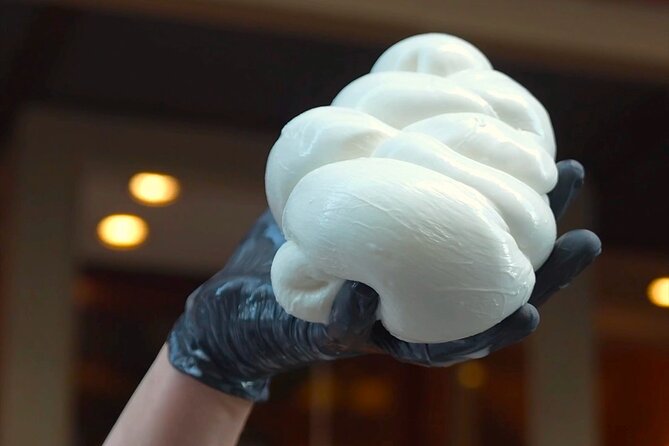
After you’ve practiced basic mozzarella shapes, the class moves toward the more indulgent styles: burrata and stracciatella. This is the part that turns a cooking class into a real food memory.
Burrata is about contrast: an outer shell with an inner creamy filling. Stracciatella takes that idea further, focusing on the soft, spoonable cream effect that makes people keep going back for “one more bite.” The instructions guide you through the process and handling needed to get that texture right.
One of the smartest touches is how you’re not just making it for pictures. The class connects these textures to flavors you’ll later taste with wine. That makes your brain do something useful: you start recognizing why one pairing works while another doesn’t.
And because this is hands-on, you’ll likely have those small moments where something clicks. Reviews highlight how practical and clear the guidance is, so don’t worry that you’ll be stuck. If you follow the steps, you end up with the kind of creamy results that make store-bought versions taste… less impressive.
Wine tasting: organic plus conventional, paired to what you made
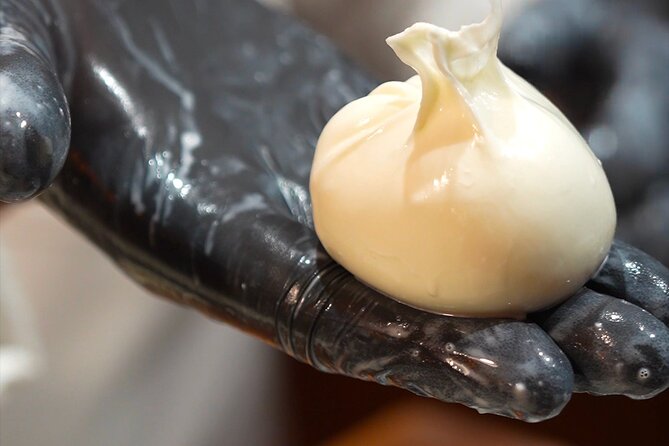
Food classes become better when the tasting has structure. Here, the guided wine tasting covers both organic and conventional wines, so you’re not just drinking—you’re comparing.
You’ll sip and swirl as you get guidance on how the wines relate to the flavors of the cheese. It’s not a stuffy lecture. The pace feels social, and you’re encouraged to share which pairing you liked most and why.
What makes this section valuable is that the wine isn’t floating in space. It’s tied to the cheese you just made and the pairing ideas you’re given. For example, you’ll hear about combinations such as stracciatella with bottarga and lemon zest—salty, briny, bright notes that make the creamy cheese feel even richer.
If you like wine, this gives you a quick but real lesson in how pairing changes your perception. If you don’t consider yourself a wine person, it still works, because the cheese gives you a baseline flavor to understand.
What you eat after the class (and why it’s part of the deal)
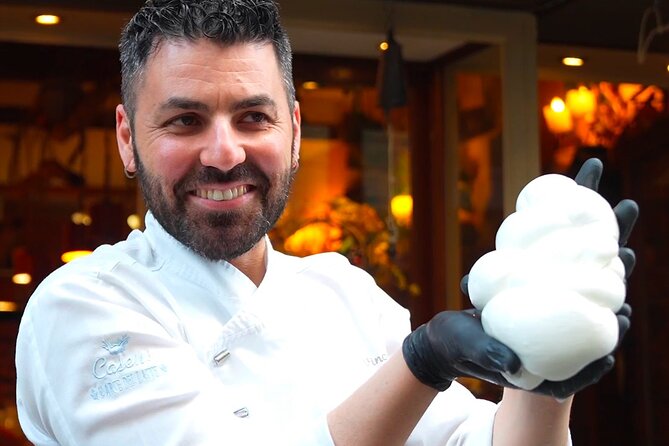
The class doesn’t end at the cutting board. You’re set up with additional food after you finish shaping and tasting.
Many people report a fuller end-of-class table that can include things like pizza, charcuterie or meats, plus a lasagna-style meal with mozzarella and tomatoes. There’s also bread at the table, and you’ll keep seeing mozzarella show up in the food you eat.
This matters for two reasons. First, it lets you compare your fresh mozzarella in different contexts—plain bites versus melted or paired into a dish. Second, it’s the reward portion: you do the work, then you eat what you helped create.
A nice extra: you can take some mozzarella home. That turns the class into more than a single meal. You get a “what you made” souvenir you can actually use in your own kitchen back home.
Price and value in Florence: a small-group class that feeds you
At $75.69 per person for about 2 hours, this class can feel like a lot until you look at what’s included. You’re paying for instruction, shaping time, multiple mozzarella styles, wine service, and additional food at the end. You’re also in a group capped at 12, which is a big deal for hands-on learning.
In a city like Florence, you can find wine tastings and you can find cooking classes. The value here is that they overlap. You don’t just learn how cheese is made—you also taste it immediately with wine pairings that help you understand why fresh mozzarella matters.
If you’re trying to build a food day in Florence, this is a strong option. It’s not too long, so you can still do other things the same day. And since it’s near public transportation, you’re not stuck planning around a complicated commute.
Also, the experience is offered in English, which lowers friction if you’re not fluent in Italian. Add the fact that it’s vegetarian and gluten-free friendly (tell the provider ahead), and you get another layer of value.
Who this is for (and who should think twice)
This is best for you if you want a practical Florence experience that mixes cooking, tasting, and a bit of fun. It’s great for cheese lovers who want to understand textures—stretchy, creamy, and fresh—and it’s also ideal if you like wine pairing as part of the fun.
It’s also a good choice if you’ve never done a cooking class before. Multiple reviews point out that the instruction feels clear and patient, and that beginners can still produce real results. The class focuses on doing the steps correctly, not on being an advanced cook.
Where you might hesitate is if you strongly dislike wine or if you want a purely non-alcohol experience. Since the class starts with Prosecco and includes a guided tasting, you should plan accordingly. It’s still possible to enjoy everything with tasting portions, but the experience does clearly center alcohol as part of the schedule.
Food needs: vegetarian, gluten-free, and timing reality
The experience is vegetarian and gluten-free friendly if you let them know in advance. That’s a real plus because cheese classes sometimes ignore food needs and force people into awkward compromises. Here, the class is set up so your plan doesn’t have to collapse around dietary restrictions.
On timing, remember the class runs about 2 hours. That’s long enough for hands-on shaping and tastings, but short enough that you’ll want to keep your evening flexible. If you’re building your Florence schedule, treat this as a focused block rather than something to squeeze between two major tours.
Should you book this mozzarella and wine class in Florence?
I think you should book it if you want one of the most hands-on, tastable food experiences Florence offers—made for people who like to eat while they learn. The small group size, the mix of mozzarella shapes plus burrata and stracciatella, and the structured wine tasting create a rare combo: you leave with better food instincts, not just photos.
I’d skip it (or at least think carefully) if wine is a hard no for you, because the tasting is part of the core flow. Otherwise, this is a smart choice for a food day in Florence, especially if you want fresh mozzarella you can actually take home.
FAQ
How long is the mozzarella cheese making class?
The class lasts about 2 hours.
Where do you meet in Florence?
You meet at Via de’ Ginori, 55 R, 50123 Firenze FI, Italy, and the activity ends back at the meeting point.
Is the tour offered in English?
Yes, it’s offered in English.
Is it vegetarian or gluten-free friendly?
Yes. It’s vegetarian and gluten-free friendly if you let the provider know in advance.
What’s the group size?
The experience has a maximum of 12 travelers.
Can I change or cancel my booking?
No. The experience is non-refundable and cannot be changed for any reason.