REVIEW · PARMA
Parma: Traditional Cheese Factory Visit with Tasting
Book on GetYourGuide →Operated by ParmaLook Food Tours Experience · Bookable on GetYourGuide
Parmigiano starts long before tasting. This guided Parma cheese factory visit walks you through Parmigiano Reggiano production from milk to aged wheels, then finishes with a paired tasting. You’ll see the real rhythm of the plant: vats, curds, whey, salting rooms, long aging, and the quality checks that make this cheese famous.
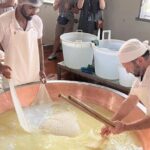
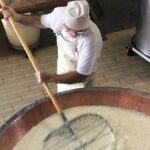
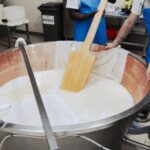
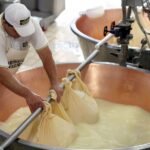
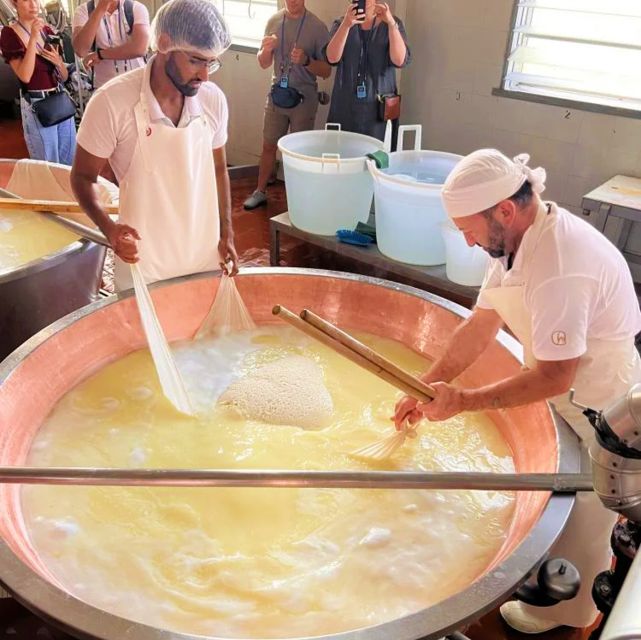
I love the way the tour stays hands-on and practical. You don’t just hear facts; you watch cheese makers pull curds from milk vats, see the curds cooked and the whey separated, and tour the rooms where wheels take shape and get salted.
One thing to consider: the visit happens rain or shine, and the dress code is strict. Sandals/flip-flops, open-toed shoes, and slippers are off-limits, so plan on closed shoes and layers for factory air.
In This Review
- Key things I think you’ll appreciate most
- Why Parmigiano Reggiano is more than a cheese label in Parma
- Getting to the factory: NH Parma pickup and an easy van rhythm
- Watching curds form: the tour’s most visual part
- From shaping rooms to salting: where the wheel starts to become a product
- Stagionatura, Consorzio hammer tests, and the fire-brand ritual
- The tasting: Parmigiano plus local wine (and sometimes more)
- Buying cheese at the end: what to look for and how to plan
- Price and value: is $82 for 2.5 hours a fair deal?
- Who should book this Parmigiano Reggiano factory visit
- Should you book this Parma cheese factory tour?
- FAQ
- How much does the Parma Parmigiano Reggiano factory tour cost?
- How long is the tour?
- Where is the meeting point in Parma?
- What time does pickup happen?
- What languages are the guides available in?
- What’s included in the ticket price?
- Does the tour run rain or shine?
- Do you offer reserve now and pay later?
- Can I cancel for a refund?
- Are there any restrictions on shoes, luggage, or accessibility?
Key things I think you’ll appreciate most
- Full Parmigiano Reggiano process, including curd pulling, cooking, and whey separation
- Real aging context in the stagionatura, with thousands of wheels aging to spec
- Consorzio quality rituals, including hammer tests and the fire-branding step
- Tasting that actually matches the day’s work, with Parmigiano and local wine at the end
- Headsets included, so even a busy guide can stay clear in your ear
Why Parmigiano Reggiano is more than a cheese label in Parma
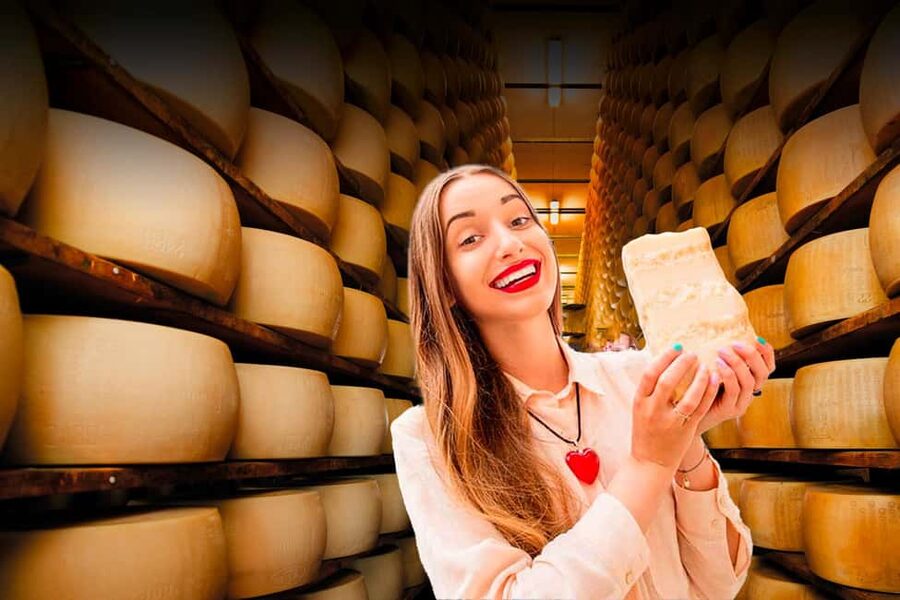
If you’ve ever bought Parmesan at home and wondered why Italians treat it like a category of its own, this tour answers that fast. Parmigiano Reggiano isn’t just something made in Italy. It’s protected, regulated, and tied to a specific production zone—Parma, Reggio Emilia, Modena, plus parts of Bologna and Mantova. That matters because the method and the raw ingredients aren’t supposed to be swapped around for convenience.
What makes the experience feel special is that you’re shown the cause-and-effect chain. Milk enters the system, curds form, whey gets separated, wheels take shape and get salted, and then the big waiting game begins. Once you see that workflow, you start tasting with context. The age matters. The texture and flavor you notice at the end don’t feel random anymore—they feel earned.
And the tour doesn’t treat aging like a vague promise. You’re guided into the stagionatura area where wheels are stored for their aging period, and the cheese is then checked through strict Consorzio procedures. That’s the kind of detail that turns a snack into a story you can retell later.
You can also read our reviews of more tours and experiences in Parma.
Getting to the factory: NH Parma pickup and an easy van rhythm
Logistics here are refreshingly simple: you’re picked up at 8:30 from NH Parma, Viale Paolo Borsellino, 31. The van waits in the parking area in front of the hotel. If you arrive via Parma train station, you’re directed to the north exit (Falcone/Borsellino) and to walk to the NH Hotel on the right, then find the van.
The ride itself is short—about 15 minutes each way—so you spend your energy on the cheese, not on transfers. Headsets are included, which is a big deal in a working production setting where voices need to compete with everything going on around you.
One timing note I’d take seriously: if you’re late past the scheduled pickup time due to train or other delays, you’re treated as a no-show. The vehicle will leave after a max of 10 minutes past the scheduled time, and late arrivals can’t be accommodated or rescheduled. That’s the kind of policy that’s common on tours, but it’s still worth planning for. Build in buffer if your train is uncertain.
Watching curds form: the tour’s most visual part
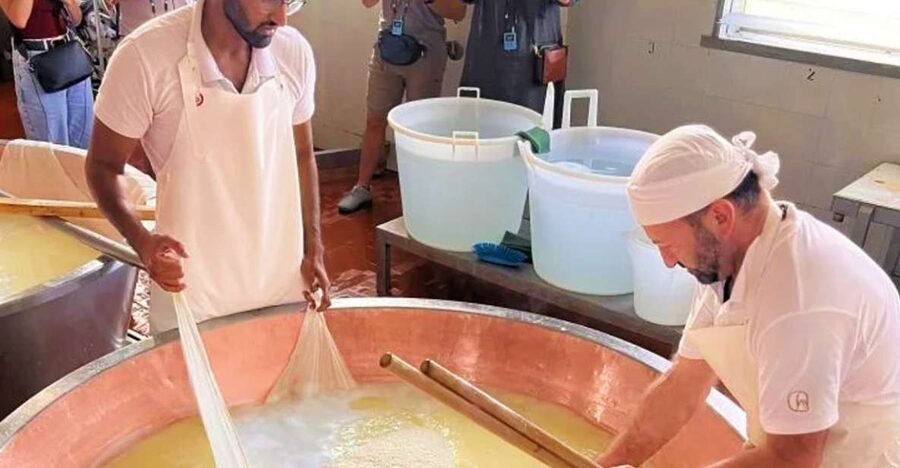
The tour’s big payoff is that you see the cheese being made, step by step. In the factory visit (about 1.5 hours on-site), you’ll get a guided look at the stages that turn milk into curds and then into a wheel you’ll eventually taste.
Here’s what makes this portion click:
- You watch curds pulled from milk vats, which is a satisfying, very tangible moment. It’s not abstract. It’s physical.
- You learn what happens when the curds are cooked and how whey is separated. Those two actions are where the texture starts getting defined.
- You get a sense that production is a schedule, not a one-off event. Cheese making depends on timing.
This is also where guides add real value. Some guides are known for making the process feel clear and interactive. For example, Danielle and Roberto have been praised for explaining the full chain from start to finish, with Roberto specifically noted for humor and question-style engagement. Sergio (sometimes listed with a first-name variant) has also been singled out for speaking clearly and taking time for questions, while George has been noted as a former chef, which tends to show in how he connects cheese to cooking and flavor use.
If you’re the kind of person who learns best by looking—then tasting—you’ll probably find this the most memorable part of the day.
From shaping rooms to salting: where the wheel starts to become a product
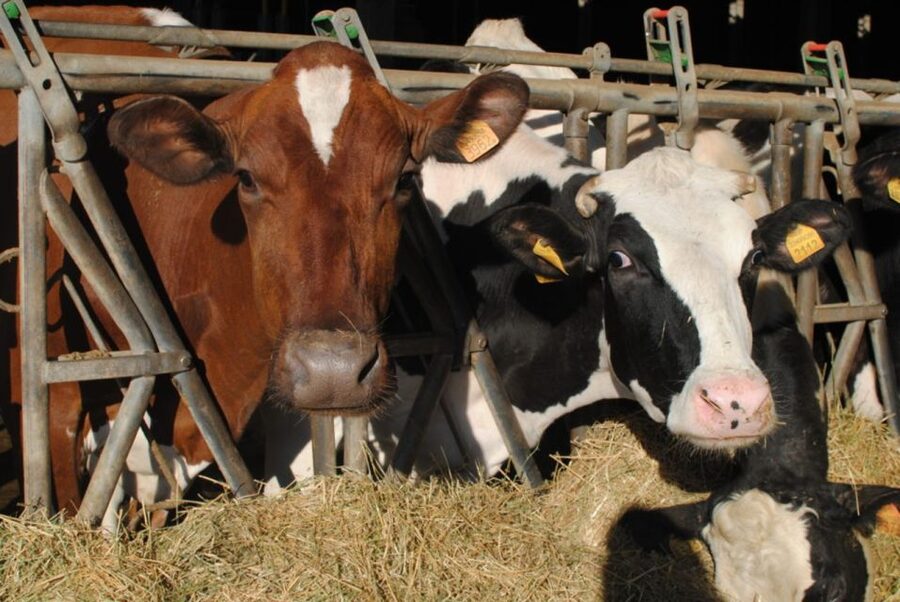
Once you’ve seen the core curd-and-whey work, you move into the rooms where the process becomes standardized: shaping and salting.
Why this matters to you as a visitor: shaping and salting aren’t just steps in a checklist. They’re the practical bridge between what happens at the vat and what happens later in aging. Salting influences the pace of flavor development and moisture behavior, and shaping sets up uniformity so wheels can age consistently.
In a factory setting, you’re also getting a feel for what makes Parmigiano Reggiano different from other cheeses people lump together. The wheels are handled and prepared with an end goal in mind: controlled aging and repeatable quality.
Expect guided explanations that connect these steps to what you’ll eventually taste. That’s the sort of connection you can only get by seeing the physical rooms and processes, not by reading a brochure.
Stagionatura, Consorzio hammer tests, and the fire-brand ritual
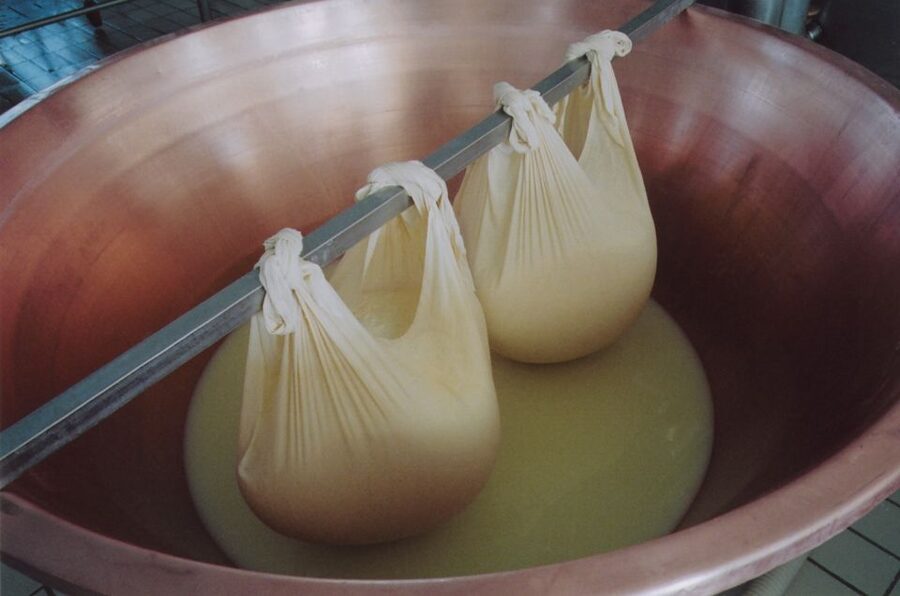
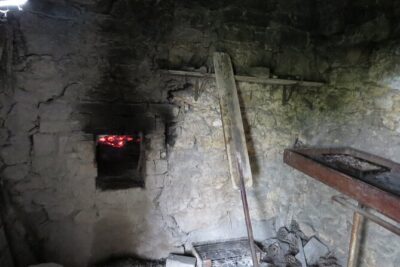
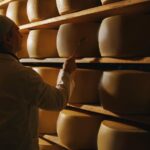
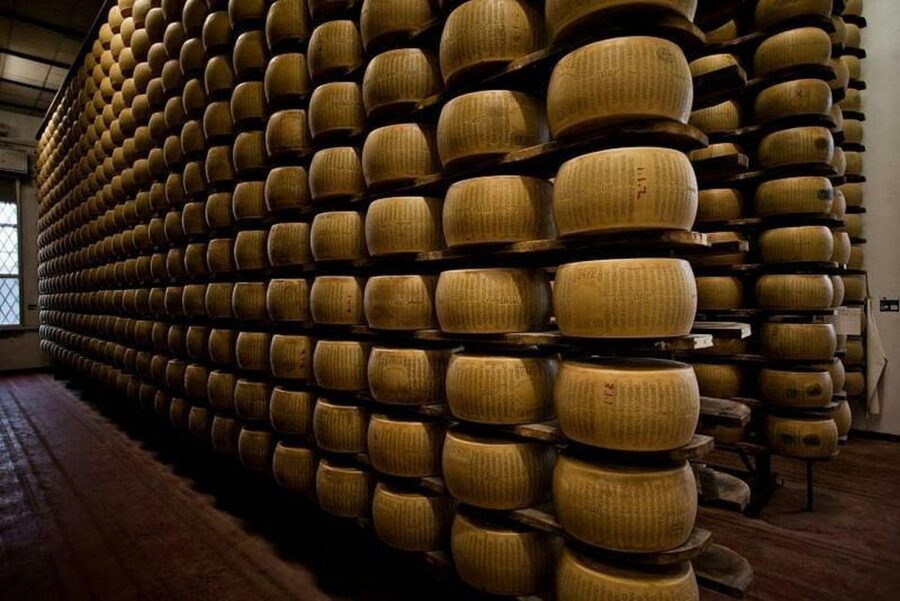
The stagionatura area is where the tour shifts from action to patience. You enter the aging stage, where thousands of wheels are stored and left to develop. This is the part that tends to make people slow down, because it’s hard not to think about time when you’re standing near so many aging wheels.
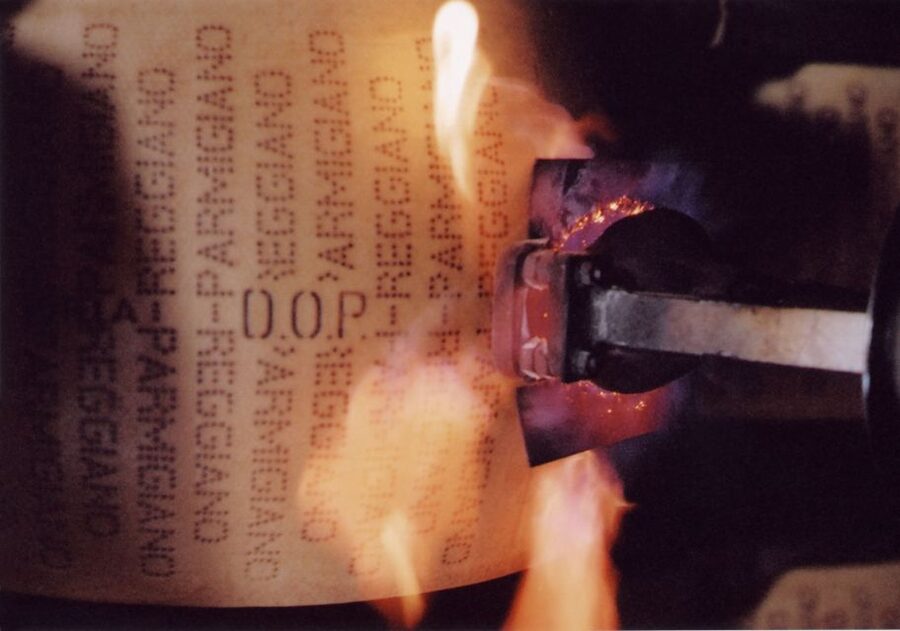
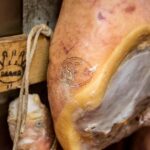
But the tour doesn’t stop at the drama of waiting. You also get the quality control story. Parmigiano Reggiano wheels are checked through strict procedures by the Consorzio, including a hammer test—described as stringent testing—and a fire-branding ritual. That combination tells you something important: the label means the cheese passed inspection, not just that it sat on a shelf.
If you’re a detail person, this is where the day becomes smarter. You start understanding why aged Parmigiano tastes the way it does. If you’re not a detail person, you’ll still feel it, because the guide’s explanation connects those tests to real outcomes you can notice in the tasting portion.

The tasting: Parmigiano plus local wine (and sometimes more)
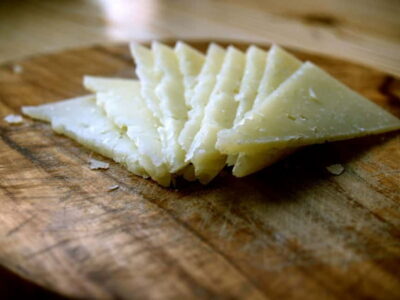
The tour ends with a tasting of Parmigiano paired with local wine. The pairing is the right way to close the loop: you taste what you saw produced, then wash it down and compare flavors in a way that makes sense for Parma.
Some tastings also come with extra local touches mentioned in the experience feedback, like balsamic vinegar and Lambrusco di Parma. You might see an aged cheese sample selection that highlights how aging changes flavor and texture. Even if your exact tasting lineup varies, the core idea is the same: learn the production story, then taste the results.
How to enjoy the tasting beyond the obvious:
- Start with the cheeses you think are milder. Then compare them to older styles.
- Pay attention to texture first, then flavor. Many people think they’re tasting only salt and nutty notes, but the aftertaste and crumb behavior often tell the bigger story.
- Sip the wine slowly. Lambrusco-style wines (when included) can cut through richness and make the cheese seem more alive.
This is also a good moment to ask your guide how to use what you buy. Several guides have been noted for giving practical recommendations, including suggestions tied to cooking—useful if you want your purchase to actually get used at home, not just sit in the fridge like a souvenir.
Buying cheese at the end: what to look for and how to plan
The experience includes time for shopping at the factory. That’s part of the value, because it’s not just a look-and-leave visit. You can often buy wheels or pre-packaged Parmesan products tied directly to the day’s production.
What you should watch for when you buy:
- Pick the aging style you want to cook with versus the one you want to shave at the table. A lot of people choose based on how they plan to eat it.
- If you’re buying multiple items, think about how you’ll store and use them before you travel far. Parmigiano is resilient, but your suitcase life matters.
One practical note: don’t plan to bring large bags or luggage. The experience is explicit that luggage/large bags aren’t allowed, and you’ll be dealing with factory space and van space. If you’re combining this with other Parma food stops, keep your carry-on light.
Price and value: is $82 for 2.5 hours a fair deal?
At $82 per person for 2.5 hours, this tour is priced like a guided, transportation-included food experience with real access. It’s not a DIY factory pass. You’re paying for the full guided explanation, entry, headsets, tastings, and the hassle-reducing van pickup from NH Parma.
Where the value tends to show:
- You get the entire production sequence, not just a photo-friendly section.
- The tour includes the aging and Consorzio quality-check story, which many shorter factory visits skip.
- The tasting gives you a clear payoff at the end, tied to what you saw earlier.
A possible consideration is that some people feel the factory time is the main event, and the rest of the experience is pacing and guidance. Still, the total duration works out cleanly for a half-day plan, especially if you’re staying near the central train area and want something meaningful without committing an entire day.
If you’re a cheese lover who wants more than a lecture, the money tends to feel justified. If you’re just casually curious, you might want to compare your interests against other Parma food tours (like prosciutto-focused ones) before deciding.
Who should book this Parmigiano Reggiano factory visit
This is a great fit if you:
- want an in-person look at how Parmesan is made from curds to aging
- enjoy food explanations that connect process to taste
- like guided tastings with local pairings (not just a small cheese bite)
It’s also a good match for families who want a culture-and-craft activity. One highlight you’ll hear from experience feedback is how people enjoy the closeness to the production team, including meeting larger members of the cheese production staff and getting a sense of the working rhythm behind the product.
Who should think twice:
- If you have mobility limitations or use a wheelchair, the experience is listed as not suitable.
- If you dislike tours with strict footwear rules, remember sandals/flip-flops/open-toed shoes and slippers aren’t allowed.
- If your schedule is fragile, protect the timing. Late pickup can’t be accommodated.
Should you book this Parma cheese factory tour?
If you want the real Parmigiano story—milk to curds to wheel to stagionatura, plus a guided tasting—this tour is a strong booking. The value comes from the sequence: you learn what you’re eating, you taste it at the end, and you leave with a clearer idea of what aging changes.
I’d book it if you’re staying near NH Parma or near the station and you want a half-day plan that feels authentic and practical, not just scenic.
Skip it if mobility is an issue for you, or if you know you’ll be frustrated by strict timing. In that case, it’s better to choose a more flexible food activity where delays won’t turn into missed pickup.
If you do book, wear closed shoes, bring no large bags, and plan your arrival so you’re at the meeting point before pickup time. That’s the simplest way to make sure the day stays smooth.
FAQ
How much does the Parma Parmigiano Reggiano factory tour cost?
It costs $82 per person.
How long is the tour?
The total duration is about 2.5 hours.
Where is the meeting point in Parma?
Pickup is at NH Parma, Viale Paolo Borsellino, 31, 43122 Parma. The van is waiting in the parking area in front of the hotel.
What time does pickup happen?
Pickup time is 8:30.
What languages are the guides available in?
The live tour guide is available in Italian and English.
What’s included in the ticket price?
Headsets to hear the guide clearly, entry tickets, and tastings.
Does the tour run rain or shine?
Yes, the tour takes place rain or shine.
Do you offer reserve now and pay later?
Yes, it offers reserve now & pay later.
Can I cancel for a refund?
Yes. Free cancellation is available up to 24 hours in advance for a full refund.
Are there any restrictions on shoes, luggage, or accessibility?
Sandals/flip flops, open-toed shoes, slippers, pets, and luggage or large bags are not allowed. The tour is also not suitable for people with mobility impairments or wheelchair users. If you arrive after the scheduled meeting time due to delays, it’s considered a no-show and can’t be accommodated, and the booking is non-refundable and non-reschedulable.