REVIEW · GOUDA
Self-Guided Walking Tour of Gouda: Canals, Colonies, and Cheese
Book on Viator →Operated by VoiceMap Audio Tours · Bookable on Viator
Gouda packs a lot into an easy walk. This self-guided audio tour stitches together cheese history, canal-market life, and standout Gothic sights, all on your schedule. You’ll move from the market square to the canals, then circle through smaller lanes that explain how Gouda built its fame.
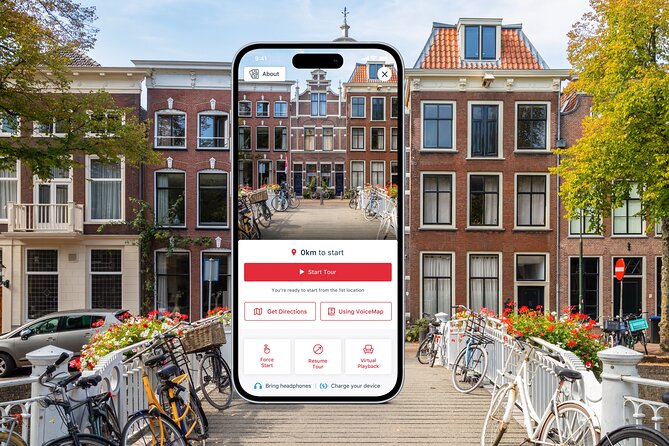
I especially like the pause-and-go freedom. You can stop for a shop, linger by a viewpoint, or backtrack without feeling rushed. A second big plus is how well it supports solo travel: offline access for audio and maps means you’re not stuck hunting for signal.
The main drawback to consider: you’ll need your own smartphone plus headphones. And like any self-guided walk, it can take a few minutes to confirm the exact start spot, so give yourself a little buffer when you arrive in the center.
In This Review
- Key Highlights
- Why Gouda Feels Made for a Self-Guided Audio Walk
- Getting Oriented at De Goudse Waag (Market Square Energy)
- Cheese Culture at Kaaswinkel Gouda: More Than a Sales Pitch
- Stadhuis van Gouda: Gothic Architecture With a Fire-Safety Twist
- Saint-John Church and Its Stained Glass Story
- Museum Gouda Courtyard Break: Art, City Life, and Culture
- Turfmarkt Canal: Where Peat Trade Shaped the City
- Lage Gouwe’s Stumbling Stones: Remembering Jewish Families
- Brewing Past at the Liquor Store: Over 200 Breweries and Monasteries
- Peperstraat (Pepper Street): Spices, Prosperity, and Trade Routes
- ’t Slot Windmill: A Classic Dutch Photo Moment
- Vissteeg and Visbank: Fish Trade Corners of the City
- Park Houtmansplantsoen: A Green Break With Dark Context
- Ending at Relais & Châteaux Weeshuis Gouda: Where the Walk Lands
- How Much Time You Really Need (And How to Make It Feel Easy)
- Price and Value: What You Get for $9.99
- Should You Book This Gouda Walking Tour?
- FAQ
- Where does the tour start?
- Where does the tour end?
- How long is the self-guided walk?
- What language is available?
- Do I need my own phone and headphones?
- Can I use the tour offline?
- Is the tour private?
- What’s the cancellation window for a full refund?
Key Highlights
- De Goudse Waag start point on the market square sets a strong historical tone from minute one
- Kaaswinkel Gouda cheese co-op explains why Gouda cheese became a global name
- Stadhuis van Gouda’s fire-safe design offers a fascinating Gothic architecture story
- Canal and marketplace lanes like Turfmarkt connect trade with everyday life
- Trade plus truth stops include Lage Gouwe’s Holocaust memorial stones and Park Houtmansplantsoen’s darker past
- Photo-perfect windmill timing at ’t Slot can be extra pretty in spring tulip season
Why Gouda Feels Made for a Self-Guided Audio Walk
Gouda is a “slow down and look” kind of place. The streets are compact enough that you’ll feel like you’re getting somewhere without hurrying, and the city center has a mix of big landmarks and smaller details you’d miss if you were just glancing as you pass.
This tour fits that style because it’s built around audio directions, not a live group pace. You’re meant to walk at your own rhythm—especially helpful when a shop window grabs your attention or you want to take more time with a building façade or stained glass.
The value is strong for the price too. At $9.99 per person, you’re paying for a structured route that also works like a flexible “walk-by” companion—plus the ticket includes offline audio and maps so you can keep going even when your phone signal gets moody.
You can also read our reviews of more tours and experiences in Gouda.
Getting Oriented at De Goudse Waag (Market Square Energy)
You start at De Goudse Waag on the market square, an easy anchor point for building your mental map of the city. This goods weighing house is the kind of place that immediately makes sense in Gouda: trade, measurement, and commerce were the engine underneath the city’s growth.
Why this stop works: it gives you a practical entry point before the tour moves into the more specific themes like cheese production and canal life. In other words, you’re not thrown into random streets right away—you’re grounded.
Practical tip: before you press play, take 30 seconds to look at your surroundings and confirm you’re at the correct building. The route depends on you starting in the right place, and Gouda’s center can feel busy even when it’s walkable.
Cheese Culture at Kaaswinkel Gouda: More Than a Sales Pitch
Next up is Kaaswinkel Gouda, the Cheese Farmers Co-op. This isn’t just a quick mention of Gouda cheese. The audio explains how the product became famous and why the co-op model mattered for production and reputation.
What I like about this stop: it connects something you’ve probably heard of—Gouda cheese—with a local system. You walk away with a clearer sense of what made the cheese culturally and economically significant, not just tasty.
What to watch for: the co-op setting is ideal for lingering. If you want to browse or ask questions, the self-guided format supports it. If you’re the type who likes to taste-test while you learn, this is a good time to build that into your route.
Stadhuis van Gouda: Gothic Architecture With a Fire-Safety Twist
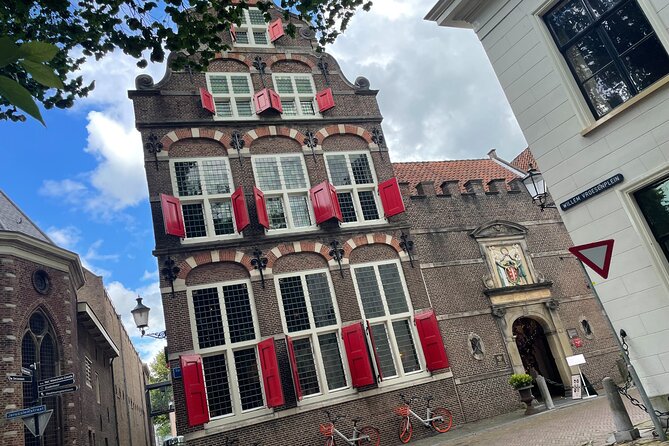
Then the tour shifts to Stadhuis van Gouda, the city hall. The big detail here is the design choice: it was built in the middle of a field to reduce fire risk, which makes the Gothic architecture story feel very real and very practical.
This stop matters because it shows how architecture wasn’t only about style. In an older trading city, fires could wipe out livelihoods, so design choices carried survival logic.
How long to spend: give it enough time to appreciate the façade details, but don’t feel trapped. The rest of the walk is paced so you can move onward when you’re done—no “mandatory photo stop” pressure.
Saint-John Church and Its Stained Glass Story
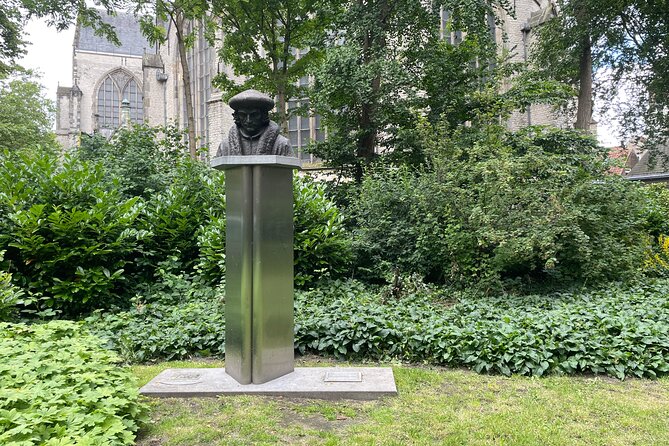
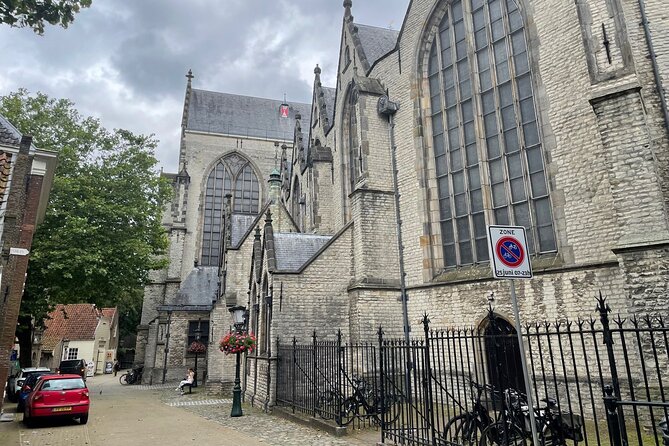
The route then passes Saint-John Church, known for its stained glass windows and its remarkable history. Even when you’re not going inside, this is the kind of exterior landmark where good audio context makes your attention sharper.
Why it’s worth your time: stained glass can look like decoration at first glance. With the audio framing it, you’re more likely to notice the storytelling aspect and the church’s place in the city’s long timeline.
If you’re short on time, don’t skip it. This is one of those points where the audio can transform a quick look into something you actually remember.
Museum Gouda Courtyard Break: Art, City Life, and Culture
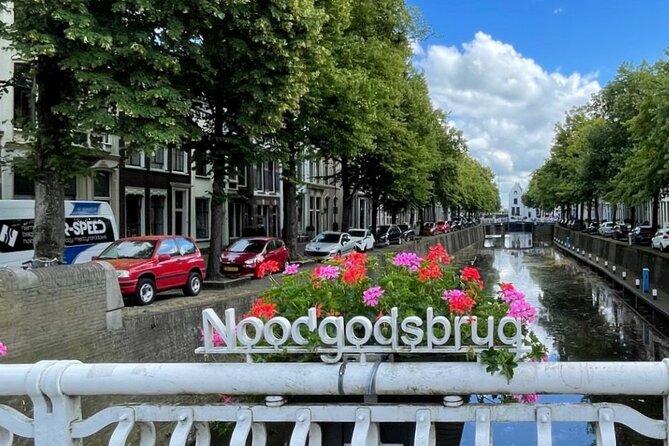
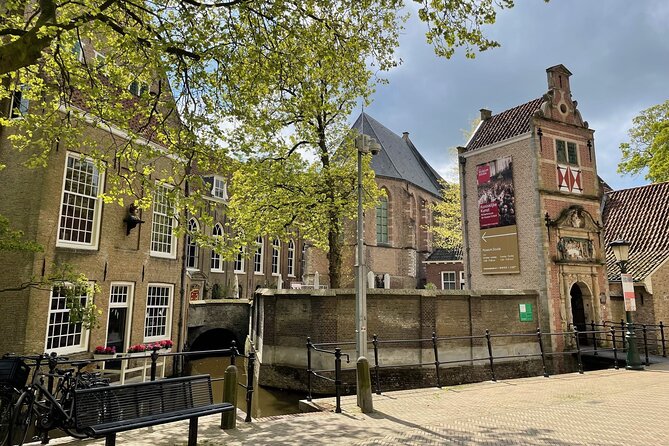
Next comes Museum Gouda and its beautiful courtyard. The focus here is on what Gouda values across art and local culture—useful context after you’ve already picked up trade themes from the market and cheese stops.
The courtyard is a smart “reset” moment. Even if you don’t go deep into museum rooms, the setting helps you slow down and absorb the city’s atmosphere before heading back out into streets and waterways.
The main drawback: if you’re the type who wants everything “hands-on,” you might wish the audio pushed you toward more specific exhibits. But the tour still does a good job giving you cultural grounding so the next canals and historic lanes make more sense.
Turfmarkt Canal: Where Peat Trade Shaped the City
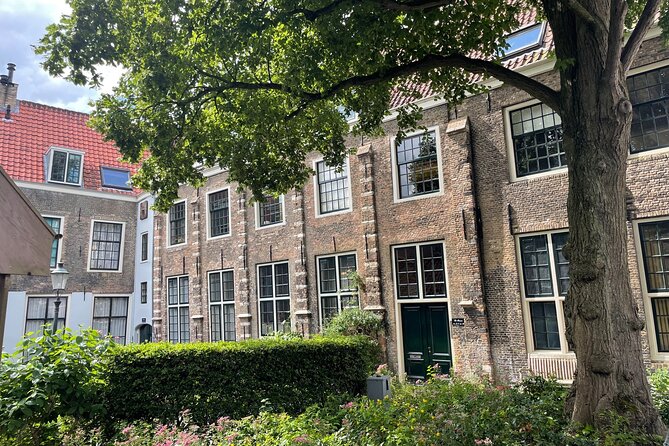
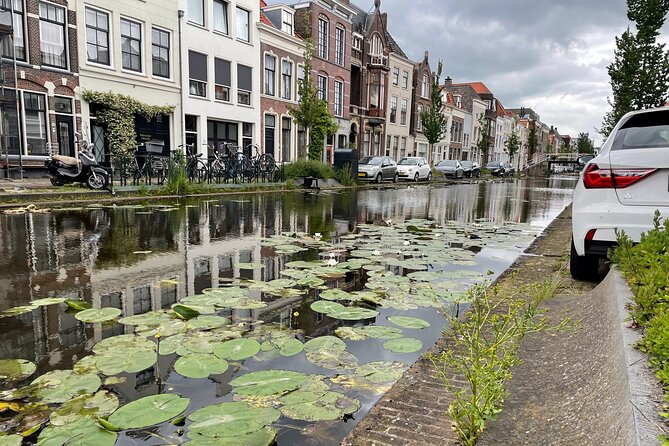
Now you move onto Turfmarkt, a long canal that once served as the central marketplace for peat. This is a great example of how Gouda’s identity wasn’t only built on cheese and aesthetics—it was built on the fuels and materials that kept daily life running.
Why this stop hits: it explains why you’ll see waterways woven into the city’s layout. Canals were not just scenic. They were infrastructure.
If you like photography, canals make it easy to frame the walk. Look for a place where you can see both the water and the street rhythm, then use the audio timing to catch yourself right as the story lands.
Lage Gouwe’s Stumbling Stones: Remembering Jewish Families
One of the most serious parts of the tour is the section tied to Gouda’s Jewish families during the Holocaust, marked by stumbling stones on the pavements of Lage Gouwe.
This is not a light topic, and the audio approach matters. It guides you to notice the memorial markers as you walk, instead of treating them as background street décor.
What I appreciate here: the tour doesn’t only show what’s beautiful. It forces a connection between place and memory. Even if you think you already know the broad story, the local focus makes it more human.
Give yourself time to absorb it. If you’re walking with earbuds cranked up, consider lowering the volume so you can actually feel the weight of the moment.
Brewing Past at the Liquor Store: Over 200 Breweries and Monasteries
Next you stop at a liquor store connected to Gouda’s brewing tradition, where the city once hosted over 200 breweries and numerous monasteries.
This is a fun contrast after the heavier history section. But it’s not random either. It continues the trade theme: beer and brewing were part of how a city fed itself socially and economically.
Why it’s useful for planning: it gives you another lens for reading Gouda. If you revisit the streets later, you’ll start spotting how local products shaped everything from work rhythms to community gathering.
Potential consideration: if you’re not a beer/liquor person, the audio still works as a cultural history thread. The point isn’t tasting everything; it’s understanding how the city’s industries formed its daily life.
Peperstraat (Pepper Street): Spices, Prosperity, and Trade Routes
Then comes Peperstraat, also known as Pepper Street. The audio links its origin to Gouda’s spice trade during its prosperous trading years.
This is the kind of detail that makes a city feel smarter. You start to see street names as clues, not labels.
What you’ll likely enjoy most: the way the story connects global goods—like spices—to a local street you can stand on. It’s a small stretch of road that can turn into a memorable “how did this get here?” moment.
’t Slot Windmill: A Classic Dutch Photo Moment
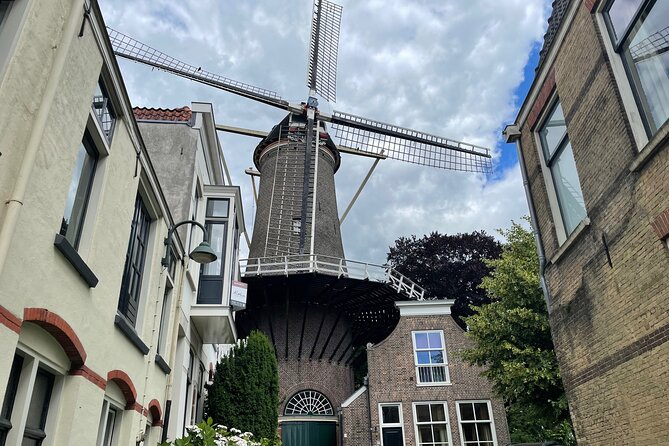
You’ll finish this major city-center loop with ’t Slot, a windmill that’s especially beautiful in spring when tulips are around.
Even if you’re not traveling in spring, windmills are a big visual payoff in the Netherlands, and the audio framing helps you appreciate why this kind of landmark fits Gouda’s overall look.
Tip: if you can, plan your photo around light. Midday can flatten details, but early or late light tends to make windmill silhouettes and surrounding colors feel more dramatic.
Vissteeg and Visbank: Fish Trade Corners of the City
The route continues through Vissteeg and past Visbank, tied to Gouda’s fish trade. This pair of stops gives you another layer of commerce: not just farmland products or brewing, but the working life behind protein supply.
Why these stops matter: trade cities often look like they’re made of markets and monuments. But the working trade network is what you’re really seeing here. These corners help you understand the “how” behind the “what.”
If you’re the type who likes practical context, you’ll probably enjoy how this section rounds out the earlier trade themes: peat for energy, spices for profit, brewing for culture, and fish for everyday meals.
Park Houtmansplantsoen: A Green Break With Dark Context
Next is Park Houtmansplantsoen, described in the audio as a green oasis that hides Gouda’s dark colonial and slavery past.
This is another moment where the tour balances calm walking with difficult truth. The park provides a mental pause—shade, open space, and a chance to catch your breath. But the audio ensures that the story doesn’t disappear when the scenery changes.
I like that it doesn’t force you to rush through the topic, because it’s easier to process with a slower pace. It also makes the “park stop” feel more meaningful than a standard sightseeing break.
Ending at Relais & Châteaux Weeshuis Gouda: Where the Walk Lands
Your tour ends at Relais & Châteaux Weeshuis Gouda on Spieringstraat. It’s a satisfying landing spot because it feels like a transition: you’ve walked through market culture, waterways, architecture, and memory, and then you land at a defined destination rather than just “another street.”
If you’re continuing your day, this ending point works well for resetting plans. You’ll likely be close enough to hop onto whatever you’re doing next in the center without feeling cut loose far from anything.
How Much Time You Really Need (And How to Make It Feel Easy)
The tour clocks in at about 1 hour 15 minutes to 1 hour 30 minutes. That time range is realistic if you listen straight through and don’t stop too often.
But here’s the advantage: it’s self-guided, so you can stretch it if you like. If you pause for a shop visit, spend longer at the architecture stops, or stop to read the memorial markers carefully, it can naturally become a longer, more reflective walk.
For first-timers to audio-guided routes, I recommend this approach:
- Keep your pace steady at first.
- If you’re enjoying a stop, slow down only there.
- Save extra wandering for after you finish the planned route, so you don’t get lost too early.
Price and Value: What You Get for $9.99
At $9.99 per person, you’re buying a lot more than a route pin. You get unlimited, lifetime use before and after your booking date, plus the audio can be replayed using the virtual playback option like an audiobook from anywhere.
That means you can do it once while you’re in Gouda, then replay it later when you’re back home or when you want to re-experience the story without re-walking every street.
You also get offline access to audio, maps, and geodata. That’s not a small detail in the real world—being able to keep your bearings without signal saves time and stress.
Should You Book This Gouda Walking Tour?
Book it if you want a structured walk that still leaves you control. It’s a great fit for solo travel, for curious couples, and for anyone who likes learning through place names, street patterns, and local industries—not just taking photos.
Skip it (or reconsider) if you strongly prefer a guided group experience with a person answering questions on the spot. This tour is built to work best when you’re comfortable following audio cues and choosing where to pause.
If you can bring your smartphone and headphones and you don’t mind doing the easy work of finding the starting point on arrival, this is a solid way to understand Gouda in a short time—without missing the city’s light side and its heavier truths.
FAQ
Where does the tour start?
It starts at De Goudse Waag, Markt 35, 2801 JK Gouda, Netherlands.
Where does the tour end?
It ends at Relais & Châteaux Weeshuis Gouda, Spieringstraat 1, 2801 ZH Gouda, Netherlands.
How long is the self-guided walk?
Expect about 1 hour 15 minutes to 1 hour 30 minutes.
What language is available?
The tour provides English audio and English written guide content.
Do I need my own phone and headphones?
Yes. You’ll need your own smartphone and headphones.
Can I use the tour offline?
Yes. The tour includes offline access to audio, maps, and geodata.
Is the tour private?
Yes. It’s private, meaning only your group participates.
What’s the cancellation window for a full refund?
You can cancel for a full refund up to 24 hours before the experience start time.